South Dakota Landlord-Tenant Law 2026: 14-Day Deposits, Entry Notice & Eviction Rules
Reading this because of your own South Dakota lease?
Upload it and the AI checks it against South Dakota rules in about 2 minutes — free, no credit card.
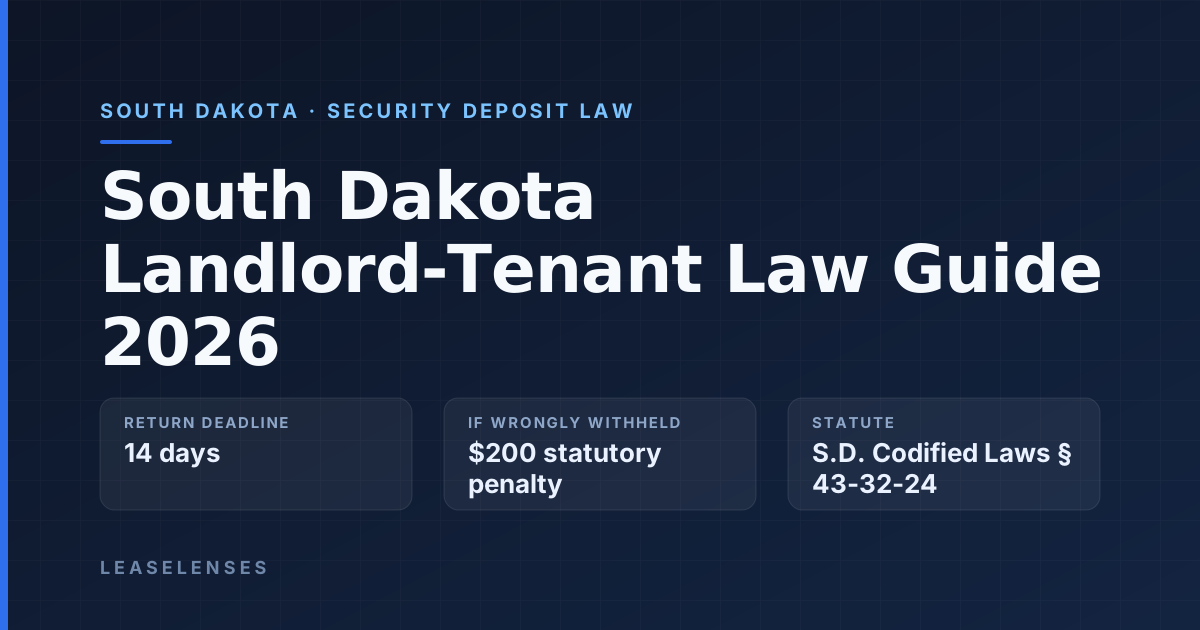
Navigating South Dakota landlord-tenant law is essential before signing, renewing, enforcing, or challenging a residential lease. Whether you rent in Sioux Falls, manage units in Rapid City, or are checking a lease in Aberdeen, the clauses that most often create real money risk are security deposits, entry rights, repair remedies, rent-change language, and eviction procedure language.
South Dakota's primary residential landlord-tenant statutes are found in South Dakota Codified Laws (SDCL) Chapter 43-32, which governs the general landlord and tenant relationship. These laws apply to most residential rental agreements and provide the baseline rights and obligations for both landlords and tenants.
This guide focuses on the 2026 issues worth checking in the actual lease: the one-month security deposit rule, the two-week deposit return deadline after the tenant provides mailing or delivery instructions, the 24-hour written entry-notice presumption, South Dakota's 2024 repeal of the separate three-day notice-to-quit requirement, and the short court answer deadline after an eviction complaint is served.
Overview of South Dakota Landlord-Tenant Law
South Dakota's landlord-tenant framework is primarily found in SDCL Chapter 43-32. The state has not adopted the Uniform Residential Landlord and Tenant Act (URLTA), so the statutory framework is more limited than in some states, placing greater importance on the lease agreement itself.
Source note: this page is based on South Dakota Codified Laws Chapter 43-32, South Dakota's Forcible Entry and Detainer statutes in Chapter 21-16, 2024 Senate Bill 90 / SL 2024, ch. 75, and current South Dakota Unified Judicial System eviction forms. It is general information, not legal advice.
Key Principles
South Dakota landlord-tenant law establishes several fundamental principles:
- Landlords must provide rental units that are safe and fit for habitation
- Tenants must maintain the premises in a reasonable condition
- Both parties must honor the lease, but the lease cannot waive statutory rights
- Deposit, entry, repair, and retaliatory-conduct clauses should track SDCL Chapter 43-32
- Eviction language should be checked against the post-2024 Chapter 21-16 process
For a deeper look at South Dakota's disclosure rules, see our landlord disclosure requirements guide.
South Dakota Security Deposit Law
Security deposits are among the most frequently disputed aspects of landlord-tenant relationships. South Dakota's rules are outlined in SDCL §43-32-6.1 through §43-32-24.
Deposit Amount Limits
Under SDCL §43-32-6.1, South Dakota generally limits residential security deposits to one month's rent. A larger deposit may be agreed to only where special conditions pose a danger to maintenance of the premises. Do not assume a lease can automatically charge two months just because the tenant has a pet; the clause should explain the special condition and the basis for the higher amount.
There is no statutory requirement that the deposit be held in a separate account or that interest be paid on the deposit.
The 14-Day Return Rule
Under SDCL §43-32-24, the landlord must either return the deposit or provide a written statement explaining why any portion is being withheld within two weeks after both of these things have happened: the tenancy has terminated, and the landlord has received the tenant's mailing address or delivery instructions.
The return period begins when:
- The tenancy has ended
- The tenant has given the landlord a mailing address or delivery instructions
- The landlord is deciding whether to return the deposit or state the specific reason for withholding it
If the tenant requests an itemized accounting of any amount withheld, the landlord must provide that accounting within 45 days after termination of the tenancy. That 45-day accounting right does not erase the initial two-week requirement to return the deposit or give a written withholding reason.
Permitted Deductions
South Dakota landlords may deduct from the security deposit for:
- Unpaid rent — Any rent owed through the end of the tenancy
- Damage beyond normal wear and tear — Costs to repair tenant-caused damage
- Other funds due under the agreement — Charges that the lease makes the tenant responsible for
- Restoration costs — Costs needed to restore the premises to the condition at the start of the tenancy
- Cleaning or utility charges — Only where they are tied to the agreement or restoration of the premises
Normal wear and tear — minor scuffs on walls, small nail holes, worn carpet from ordinary use, and fading paint — cannot be deducted. Document the condition of the unit thoroughly at move-in and move-out with dated photos and signed checklists.
Consequences of Non-Compliance
If a landlord fails to comply with SDCL §43-32-24, the landlord forfeits the right to withhold any portion of the deposit. Bad-faith retention can also expose the landlord to punitive damages of up to $200. Because the statutory penalty is specific, the lease should not describe South Dakota deposit penalties using generic "double deposit" or attorney-fee language from other states.
Tenant Rights to Habitable Housing in South Dakota
South Dakota recognizes an implied warranty of habitability, requiring landlords to provide and maintain rental units that are safe and fit for human habitation.
Landlord Obligations Under SDCL Chapter 43-32
South Dakota landlords must:
- Keep the premises and common areas in reasonable repair and fit for human habitation
- Keep electrical, plumbing, and heating systems in good and safe working order
- Avoid lease language that waives or modifies the statutory repair obligation
- Deliver quiet enjoyment of the premises against lawful claimants
Tenant's Maintenance Responsibilities
Under South Dakota law, tenants must:
- Keep the premises clean and sanitary
- Dispose of garbage and waste properly
- Use electrical, plumbing, heating, and other systems reasonably
- Not deliberately or negligently destroy, deface, damage, or remove any part of the premises
- Report maintenance issues promptly to the landlord
Repair Remedies for Tenants
If a landlord fails to maintain the property in habitable condition after receiving notice, tenants have several remedies:
1. Written Notice to the Landlord
The first step is always to notify the landlord in writing. Under SDCL §43-32-9, the tenant must give notice of the conditions requiring repair and allow a reasonable time for the landlord to act. The statute does not create a universal 14-day repair deadline, so the notice should describe the condition, why it affects habitability, and what deadline is reasonable under the circumstances.
2. Termination of Lease
Under SDCL §43-32-9, if the landlord neglects to make required repairs within a reasonable time after notice, the tenant may repair and deduct the expense, recover the expense, or vacate and be discharged from additional rent or performance obligations. If the necessary repairs exceed one month's rent, the statute includes a separate rent-withholding deposit procedure that should be followed carefully.
3. Legal Action
Tenants can file a lawsuit against the landlord for breach of the implied warranty of habitability, seeking damages, rent abatement, or injunctive relief.
Entry Rights: When Can South Dakota Landlords Enter?
South Dakota has a specific entry-notice statute. SDCL §43-32-32 balances the landlord's need to inspect, repair, and show the property with the tenant's right to quiet enjoyment.
Reasonable Notice Requirement
Except in emergencies or where notice is impracticable, a landlord or agent must give reasonable notice and enter only at reasonable times. Twenty-four hours' written notice is presumed reasonable unless the lease mutually agrees to another method or time for entry.
The written notice should state the date or dates of entry, a normal-business-hours window, the purpose of entry, and a way for the tenant to request rescheduling.
Permitted Reasons for Entry
Landlords may enter with proper notice for:
- Making necessary or agreed-upon repairs
- Inspecting the premises
- Showing the property to prospective tenants, buyers, or contractors
- Addressing emergency situations
- Other purposes agreed upon by both parties
Emergency Entry
Landlords may enter without notice in genuine emergencies, such as fire, gas leaks, burst pipes, or other situations involving imminent danger to persons or property. Landlords may also enter if they reasonably believe the tenant has abandoned the premises.
Free check · no account, no card
Check this against your own lease
This guide covers South Dakota's rules. The free check tells you which ones your lease actually meets, misses, or waives. Paste the clause here and keep reading — the verdict appears on this page.
Skip full upload for now
Paste one clause and get the first free verdict.
Use the exact wording about deposit, repairs, entry, notice, renewal, fees, waiver, or move-out. We keep this article's state-law context, show a free clause verdict first, and ask for payment only if the Action Packet is useful.
What the free verdict includes
Free verdict includes
What to paste
Paid packet adds
Exact clause proof · Preferred, fallback, and minimum wording · Likely reply, evidence to keep, deadline radar, and PDF export
Have the lease open?
Copy 2-6 sentences from the clause into the box. No file or card is needed for the first verdict.
Eviction Process in South Dakota
South Dakota eviction procedures are governed by SDCL Chapter 21-16 (Forcible Entry and Detainer) and related court rules. A major 2024 change matters for older lease forms: Senate Bill 90 repealed SDCL §21-16-2, the former statute requiring a separate three-day written notice to quit before certain eviction proceedings.
Valid Grounds for Eviction
South Dakota landlords can pursue eviction for:
- Nonpayment of rent — Failure to pay rent for more than three days after it is due
- Material lease violations — Breaches of significant lease terms
- Criminal activity — Illegal conduct on the premises
- Holding over — Remaining after the lease term expires
- Health or safety violations — Tenant actions that endanger the property or other tenants
Notice and Filing Rules After the 2024 Change
Older South Dakota lease templates often say a landlord must serve a "3-day notice to pay or vacate" before filing. That language needs review. After SB90 / SL 2024, ch. 75, the separate notice-to-quit statute was repealed, but Chapter 21-16 still defines eviction grounds such as holding over and failing to pay rent for more than three days after rent is due.
Practical lease review point: check whether the lease promises a notice or cure period that is longer than the statutory minimum. If it does, the landlord may still need to follow the lease's own promise even when state law no longer requires the old statutory notice.
The Eviction Court Process
Once the landlord has grounds to proceed and any lease-promised notice or cure period has been handled, the landlord can file an eviction action in circuit court:
- Filing: Landlord files a complaint for forcible entry and detainer with the circuit court and pays the filing fee
- Service: The tenant is served with a summons and verified complaint
- Answer deadline: Current South Dakota UJS eviction forms tell tenants to file and serve an answer within 5 days after being served
- Judgment: The judge hears evidence from both sides and issues a ruling
- Writ of Restitution: If the landlord prevails, the court issues a writ of restitution, and the sheriff can remove the tenant
Self-Help Evictions Are Illegal
South Dakota law prohibits self-help evictions. Landlords cannot:
- Change locks to exclude the tenant
- Shut off utilities
- Remove tenant belongings
- Physically remove or intimidate the tenant
Violations can result in liability for actual damages plus additional penalties.
Retaliation Protections
South Dakota has statutory retaliation protections in SDCL §§43-32-27 and 43-32-28. A landlord should not increase rent above fair market value, decrease services, or give a notice to vacate that is not based on a lease breach after a tenant:
- Complaining about habitability issues or code violations
- Filing a complaint with a government agency
- Joining or organizing a tenant association
The retaliation statute includes a 180-day timing rule and allows tenant remedies tied to SDCL §43-32-6, plus possible attorney fees.
Lease Termination and Renewal in South Dakota
Fixed-Term Leases
A fixed-term lease expires at the end of the stated term unless the lease or the parties' conduct renews it. Under SDCL §43-32-14, if the tenant remains in possession after expiration and the landlord accepts rent, the parties are presumed to have renewed the hiring on the same terms and for the same time, not exceeding one year.
Month-to-Month Tenancies
For month-to-month tenancies, termination notice generally must be given at least as long before expiration as the rental term itself, not exceeding one month. For lease modifications in a month-to-month tenancy, SDCL §43-32-13 requires written notice at least 30 days before the expiration of the month, and the tenant may terminate effective the first day of the next month by giving notice within 15 days after receiving the modification notice.
Early Termination
Tenants may terminate a lease early without penalty in certain situations:
- Active military duty under the Servicemembers Civil Relief Act (SCRA)
- Landlord's material breach of the lease or habitability obligations
- Domestic abuse, unlawful sexual behavior, or stalking situations under SDCL §43-32-19.1
- Uninhabitable conditions that the landlord refuses to remedy
Otherwise, tenants who break a lease early may remain liable under the lease. The actual exposure depends on the lease language, the timing of surrender, rent acceptance, re-rental facts, and any applicable federal protections.
How LeaseLenses Helps Review South Dakota Leases
South Dakota lease disputes often turn on ordinary-looking language: extra deposit clauses, entry windows, cleaning charges, repair remedies, renewal language, or eviction provisions copied from an older form. Before signing or enforcing a lease, review the document against the current statutes and court process.
AI-Powered Lease Analysis for South Dakota Requirements
LeaseLenses reviews the lease language in front of you and flags clauses worth checking, including:
- Deposit clauses that exceed one month's rent without explaining a qualifying special condition
- Deposit-return clauses that omit the two-week written statement rule or confuse it with the 45-day itemized accounting rule
- Entry clauses that allow access without 24-hour written notice, a purpose, or a rescheduling path
- Repair clauses that try to waive the landlord's statutory obligations under SDCL §43-32-8
- Eviction clauses that still describe the repealed three-day notice-to-quit statute as if it were current law
What to Check Before You Pay or Sign
If you found this guide because you searched "South Dakota landlord tenant law" or "South Dakota security deposit law," the next useful step is checking the actual lease language:
- Does the deposit exceed one month's rent?
- Does the lease say when and how the deposit will be returned?
- Does entry language match the 24-hour written notice presumption?
- Does the lease use outdated eviction notice language?
- Does the renewal or rent-change clause give the required written notice?
Upload your South Dakota lease to LeaseLenses and review the deposit, entry, repair, renewal, and eviction clauses before money or possession is on the line.
Frequently Asked Questions
Q: What is the maximum security deposit a landlord can charge in South Dakota?
A: Under SDCL §43-32-6.1, the standard maximum security deposit is one month's rent. A larger deposit may be agreed to only where special conditions pose a danger to maintenance of the premises.
Q: How long does my South Dakota landlord have to return my security deposit?
A: Under SDCL §43-32-24, landlords must return the deposit or provide a written statement explaining any withholding within two weeks after termination of the tenancy and receipt of the tenant's mailing address or delivery instructions. If the tenant requests an itemized accounting of withheld amounts, the landlord must provide it within 45 days after termination.
Q: Can my South Dakota landlord enter my apartment without notice?
A: Only in genuine emergencies or where notice is impracticable. Otherwise, SDCL §43-32-32 requires reasonable notice and reasonable entry times, and 24 hours' written notice is presumed reasonable unless the lease mutually agrees to another method or time.
Q: How much notice does a landlord need to give before eviction in South Dakota?
A: Be careful with older answers on this point. South Dakota repealed SDCL §21-16-2 in 2024, removing the former separate three-day notice-to-quit requirement for certain eviction actions. Current UJS forms tell tenants served with a summons and eviction complaint to file and serve an answer within 5 days. Separate lease-promised notice periods and month-to-month termination notice rules may still matter.
Q: Does South Dakota have rent control?
A: No. South Dakota does not have any rent control laws. Landlords can set and increase rent without statutory limits, but they must provide proper notice for month-to-month tenancies and cannot increase rent during a fixed-term lease unless the lease allows it.
Conclusion: Navigating South Dakota Landlord-Tenant Law in 2026
Understanding South Dakota landlord-tenant law empowers both landlords and tenants to navigate their rental relationships with confidence. South Dakota Codified Laws Chapter 43-32 provides a framework for security deposits, habitability standards, repair procedures, entry rights, and eviction protections.
Key takeaways for 2026:
- Security deposits are generally capped at one month's rent, with larger deposits only for agreed special conditions that pose a danger to maintenance of the premises
- Deposit returns or written withholding reasons are due within two weeks after termination and receipt of the tenant's mailing address or delivery instructions; requested itemized accountings are due within 45 days
- Follow the post-2024 eviction court process through the courts — never resort to self-help
- Maintain properties in habitable condition and respond to repair requests within a reasonable timeframe
- Provide 24-hour written entry notice unless an emergency, impracticability, or mutually agreed lease method applies
- Document everything with move-in/move-out inspections and photos
Ready to check the lease instead of guessing from a generic checklist? Upload your South Dakota lease to LeaseLenses and review the clauses most likely to affect your deposit, repairs, entry rights, renewal, and eviction exposure.
Turn this guide into your lease gap checklist
Find the South Dakota deposit, entry, repair, and post-2024 notice language in your lease
Choose the PDF or Word lease first and preview whether one-month deposit, two-week return, 45-day accounting, 24-hour entry, repair, and outdated eviction-notice clauses appear before paying.
The free check runs first — no credit card. You only ever pay if the findings are worth keeping.
Money, repair, notice, and move-out clauses to verify
A state guide explains the rule; a lease scan shows whether the document you are about to sign gives you a money, deadline, or rights problem.
- Security deposit, late fee, entry notice, and repair duties
- Missing disclosures, waiver language, and one-sided penalties
- State compliance warnings with copy-ready next steps to send or keep
Want the South Dakota deadline emailed to you on the day it lands?
Tell us the day you moved out. We count the 14 days S.D. Codified Laws § 43-32-24 allows and email you once, on the day the landlord runs out of time — with what you can do next.
No newsletter, no account. Your address is used for this one email.
Ready to compare this South Dakota guide with your lease?
Sign in once, then choose your lease. The free preview shows whether one-month deposit, two-week return, 24-hour entry, repair, or outdated eviction-notice language appears in the file; unlock the action packet from $9.99 only if it helps.