Ohio Security Deposit Law: 30-Day Return (ORC 5321.16)
Deposit still missing or deductions disputed?
Enter your move-out details to preview a demand letter with state-law references. Pay only to unlock the full letter and PDF; no lease upload or account needed.
Free preview · $19 once for the full PDF
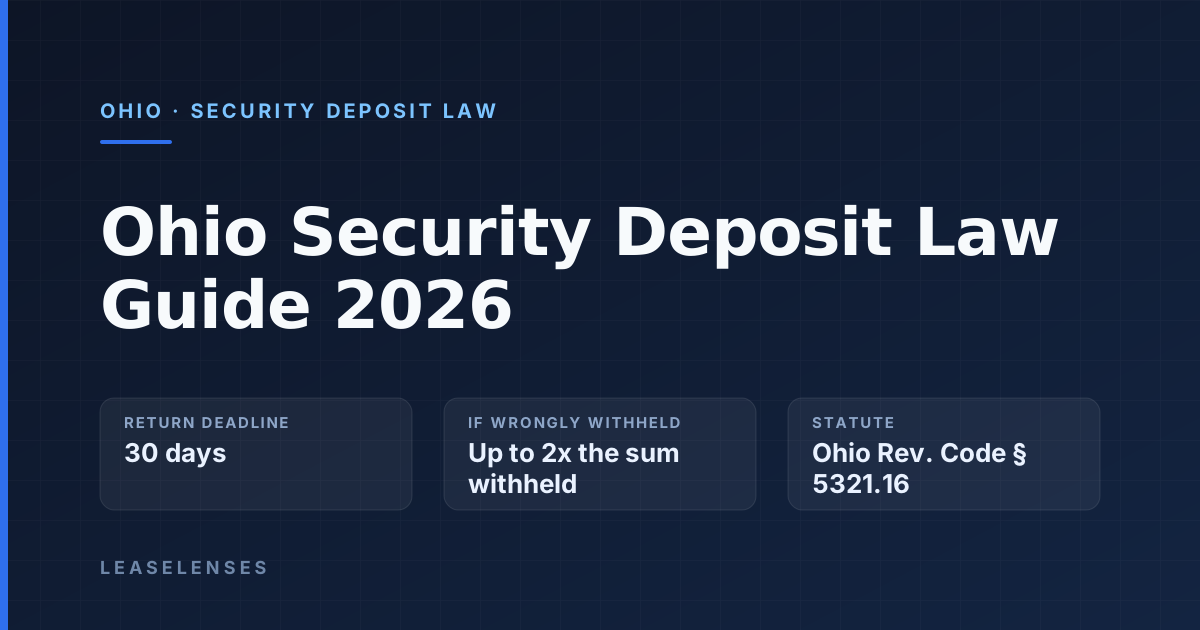
Ohio security deposit disputes usually come down to a few lease clauses: how much was collected, whether any part earns interest, what counts as damage, when the landlord must itemize deductions, and whether the tenant gave a written forwarding address. Ohio Revised Code §5321.16 sets the core statewide rule, but the lease still determines how cleanly both sides can document the move-out process.
If you are reviewing an Ohio lease, do not stop at "30-day return." Check whether the lease explains the exact deadline trigger, identifies refundable versus non-refundable charges, handles the 5% interest rule for larger deposits, and requires specific itemized deductions instead of vague cleaning or damage fees.
Upload your Ohio lease to LeaseLenses to check whether the deposit clause, pet deposit language, cleaning fees, move-out process, and forwarding-address terms create avoidable refund or double-damage risk.
Ohio Deposit Clauses to Check First
| Lease issue | Ohio rule or risk | Why it matters |
|---|---|---|
| Return deadline | Deposit or itemized deductions are due within 30 days after termination of the rental agreement and delivery of possession | A vague "after move-out" clause can create deadline disputes |
| Forwarding address | Tenant must provide a written forwarding or new address to preserve statutory damages and attorney-fee remedies | The lease should tell tenants how and where to send it |
| Interest | Excess over $50 or one month's periodic rent, whichever is greater, earns 5% annual interest if possession lasts six months or more | Larger deposits need annual tracking |
| Itemized deductions | Deductions must be itemized and identified in writing | "Cleaning/damages" without specifics is weak evidence |
| Permitted withholding | Deposit can cover past-due rent and damages from tenant noncompliance or the rental agreement | Broad penalty clauses can overreach |
| Refundable vs. non-refundable fees | Fees should be clearly labeled and separated from the security deposit | Ambiguous pet, cleaning, or admin charges invite disputes |
What LeaseLenses Checks in an Ohio Deposit Clause
Ohio security deposit law is simple enough to summarize, but most disputes are won or lost in the wording of the actual lease. A useful lease review should not just say "Ohio has a 30-day rule." It should point to the clause, explain the money at stake, and give both sides a practical next step.
Here is what a full LeaseLenses report is designed to surface when an Ohio lease includes deposit language:
| If your lease says... | LeaseLenses should flag... | Why it is worth checking |
|---|---|---|
| "Deposit may be used for cleaning, repairs, fees, or any other charges at landlord's discretion." | Overbroad deduction language and missing itemization standards | Vague deduction rights are harder to challenge or defend because they do not separate damage, rent, cleaning, and ordinary wear |
| "Security deposit will be returned after move-out." | Missing 30-day timing language and unclear deadline trigger | Ohio's clock depends on termination, delivery of possession, and the tenant's forwarding address |
| "Pet deposit and cleaning fee are non-refundable." | Refundable vs. non-refundable labels and whether the charge is really a deposit | Ambiguous labels can turn a simple fee into a refund dispute |
| "Tenant forfeits deposit for early move-out or lease violation." | Possible penalty language and whether actual damages are still required | Automatic forfeiture clauses can create unnecessary double-damage exposure |
| No forwarding-address instructions | Missing tenant action step | Tenants need to know where and how to send the written address that preserves statutory remedies |
The free preview should tell you whether these issues exist. The action packet is for the point where you need the exact clause, the reason it matters, the money or rights at stake, and suggested wording to ask the landlord or tenant to clarify. View a sample action packet before uploading if you want to see the difference between a generic legal summary and clause-by-clause next steps.
Ohio Security Deposit Limits: What You Can Charge
One of the first questions landlords ask is: "How much can I charge for a security deposit in Ohio?"
No Statutory Maximum
Ohio law does not impose a statutory limit on security deposit amounts. Unlike states like California or New York that cap deposits at one or two months' rent, Ohio gives landlords discretion to set deposit amounts based on their assessment of risk, property value, and market conditions.
However, this flexibility comes with practical considerations:
- Market competitiveness: Charging excessive deposits may make your property less attractive to qualified tenants
- Reasonableness: While legal, unreasonably high deposits could face challenges in court as potentially unconscionable
- Local ordinances: Some Ohio municipalities may have local regulations, so always check city-specific rules
Most Ohio landlords charge between one to two months' rent as a security deposit, which aligns with tenant expectations and industry standards. For higher-end properties or tenants with credit concerns, some landlords charge more, but transparency about your reasoning is important.
Pet Deposits and Other Fees
Many landlords charge additional fees or deposits for pets, parking, or amenities. Under Ohio law, these are typically treated separately from security deposits, but you should clearly specify in your lease:
- Whether fees are refundable or non-refundable
- What each deposit covers
- The conditions for return or retention
Be specific about the purpose of each deposit to avoid confusion at move-out.
Interest on Larger Security Deposits
Ohio law requires interest on certain larger deposits. Any security deposit amount above $50 or one month's periodic rent, whichever is greater, must earn 5% annual interest on the excess amount if the tenant remains in possession for six months or more.
That interest must be computed and paid annually. For ordinary one-month deposits, this rule may not create any interest obligation. For larger deposits, long-term tenancies, or deposits that include multiple refundable components, landlords should document the calculation clearly in the lease file.
The 30-Day Return Rule: Ohio's Timeline Requirements
Ohio Revised Code §5321.16 establishes strict timelines for returning security deposits after a tenant vacates.
Basic Timeline: 30 Days
Landlords must return the security deposit or provide an itemized statement of deductions within 30 days after the rental agreement ends and the tenant delivers possession of the property to the landlord.
The 30-day period begins when:
- The tenant completely moves out
- All keys are returned to the landlord
- The tenant has surrendered possession
The tenant must provide a forwarding address or new address in writing. Without that written address, the tenant may lose the statutory right to recover damages and attorney's fees for a late or improper return, though landlords should still keep careful records and make a reasonable return attempt.
What Must Be Included
When returning a security deposit, you must provide:
- Full refund: If no deductions are made, return the entire deposit
- Itemized statement: If making deductions, provide a detailed list showing:
- The specific reasons for each deduction
- The amount of each deduction
- The remaining balance being returned (if any)
- Supporting documentation: While not explicitly required by statute, providing receipts or invoices strengthens your case if challenged
Consequences of Missing the Deadline
Failing to meet the 30-day deadline can have serious consequences:
- Disputed deductions: Unsupported or late deductions become harder to defend
- Return of wrongfully withheld funds: The tenant may recover the money that should have been returned
- Double-damage exposure: The tenant may also recover damages equal to the amount wrongfully withheld
- Attorney's fees: If the tenant sues and prevails under the statute, reasonable attorney's fees may be awarded
Given these potential penalties, it's crucial to act promptly. Set calendar reminders and use tools like LeaseLenses to check whether the lease's deposit clause, forwarding-address language, and move-out process match Ohio's rules.
Permitted Deductions: What Can Landlords Withhold?
Ohio law permits landlords to deduct from security deposits for specific, legitimate expenses. Understanding what you can and cannot deduct is critical to staying compliant.
Lawful Deductions Under Ohio Law
Under Ohio Revised Code §5321.16, landlords can deduct for:
Unpaid Rent: Any rent that remains due and unpaid at the time of move-out
Damage Beyond Normal Wear and Tear: Repairs for damage caused by the tenant, their family, or guests that exceeds normal deterioration from ordinary use
Unpaid Utilities: If the tenant was responsible for utilities under the lease and left unpaid bills
Lease Violations: Costs associated with breaches of the lease agreement
Cleaning Costs: Expenses to return the property to the same level of cleanliness as at move-in (not general cleaning for normal use)
Normal Wear and Tear vs. Damage: The Critical Distinction
The most common source of security deposit disputes is the difference between "normal wear and tear" and actual "damage."
Normal Wear and Tear (cannot deduct):
- Faded paint or wallpaper from sunlight
- Minor scuffs or marks on walls
- Worn carpet in high-traffic areas
- Small nail holes from hanging pictures
- Loose door handles or cabinet hinges
- Minor scratches on hardwood floors
- Faded or worn window treatments
Damage (can deduct):
- Large holes in walls
- Burns or major stains on carpets
- Broken windows or doors
- Missing fixtures or appliances
- Excessive dirt requiring deep cleaning
- Pet damage (urine stains, scratches, odors)
- Broken tile or damaged countertops
Documentation is your best friend in distinguishing between these categories. Always conduct thorough move-in and move-out inspections with dated photos or videos.
Itemization Requirements
When making deductions, your itemized statement should include:
- Description of each deduction: Be specific ("Replace broken bedroom window" not just "damage")
- Cost of each item: Provide the dollar amount for each repair or cleaning task
- Supporting evidence: Attach copies of receipts, invoices, or estimates
- Calculation method: If you or your employees perform the work, explain how you calculated the charge (hours × reasonable hourly rate)
Example of a proper itemization:
Security Deposit Return Statement
Tenant: John Smith
Property: 123 Main St, Columbus, OH
Move-out Date: January 31, 2026

Security Deposit Held: $1,200.00

Deductions:
- Unpaid February rent (prorated): $400.00
- Replace broken bathroom mirror: $125.00
- Professional carpet cleaning (pet stains): $150.00
- Repair hole in living room wall: $75.00
Total Deductions: $750.00

Balance Due to Tenant: $450.00
Common Mistakes to Avoid
Deducting for normal wear and tear: This is the most common error and often leads to disputes
Vague descriptions: "Cleaning" or "Damage" without specifics won't hold up in court
Charging more than actual costs: You can only deduct actual expenses, not inflated amounts
Deducting for pre-existing damage: Document the property's condition at move-in to avoid this issue
Missing the 30-day deadline: Even valid deductions become harder to defend if you don't act promptly
Required Documentation and Best Practices
Proper documentation is your best protection against security deposit disputes.
Move-In Inspection Checklist
Before a tenant moves in:
- Conduct a thorough walk-through with the tenant present
- Document existing conditions in writing on a detailed checklist
- Take photos or videos of every room, showing all walls, floors, fixtures, and appliances
- Date and timestamp all documentation
- Have both parties sign the inspection report
- Provide the tenant a copy for their records
Your move-in checklist should cover:
- Walls and ceilings (paint condition, holes, cracks)
- Floors (carpet wear, hardwood scratches, tile condition)
- Windows and doors (operation, locks, glass condition)
- Kitchen (appliances, countertops, cabinets, sink)
- Bathrooms (fixtures, tile, toilet, tub/shower)
- HVAC and utilities (thermostats, water heater, electrical outlets)
- Exterior (if applicable)
- Cleanliness level
Move-Out Inspection Process
When a tenant moves out:
- Schedule the inspection within 24-48 hours of the tenant vacating
- Compare to move-in documentation using your original checklist and photos
- Take new photos or videos showing current condition
- Note any changes that constitute damage beyond normal wear and tear
- Invite the tenant to attend if possible (though not required in Ohio)
- Document immediately to avoid disputes about timing
Keeping Records
Maintain thorough records of:
- Original lease agreement with security deposit amount
- Move-in and move-out inspection reports
- All photos and videos with dates
- Receipts for repairs and cleaning
- Communication with the tenant about deposits
- Bank records showing deposit received and returned
Keep these records for at least two years after the tenancy ends to protect yourself in case of a delayed claim.
Using Technology to Stay Organized
Managing documentation manually can be overwhelming, especially with multiple properties. Before signing, renewing, or enforcing a lease, consider using LeaseLenses to:
- Check whether the lease explains Ohio's 30-day return rule
- Flag security deposit clauses that omit interest, forwarding-address, or itemization language
- Spot refund, deduction, pet deposit, and cleaning-fee terms that need a closer look
- Generate a plain-English report you can use when discussing lease revisions
Free check · no account, no card
Check this against your own lease
This guide covers Ohio's rules. The free check tells you which ones your lease actually meets, misses, or waives. Paste the clause here and keep reading — the verdict appears on this page.
Skip full upload for now
Paste one clause and get the first free verdict.
Use the exact wording about deposit, repairs, entry, notice, renewal, fees, waiver, or move-out. We keep this article's state-law context, show a free clause verdict first, and ask for payment only if the Action Packet is useful.
What the free verdict includes
Free verdict includes
What to paste
Paid packet adds
Exact clause proof · Preferred, fallback, and minimum wording · Likely reply, evidence to keep, deadline radar, and PDF export
Have the lease open?
Copy 2-6 sentences from the clause into the box. No file or card is needed for the first verdict.
Tenant Rights and Dispute Resolution
Understanding tenant rights helps you navigate potential disputes professionally and legally.
What Tenants Can Do If Deposits Aren't Returned
If you fail to return a security deposit or provide an itemized statement within 30 days, Ohio tenants have several options:
Send a demand letter: Request return of the deposit with a specific deadline
File a small claims lawsuit: For deposits up to $6,000, tenants can file in small claims court
Seek damages: If successful, tenants can recover the wrongfully withheld amount, statutory damages equal to that amount, and reasonable attorney's fees
Report to local housing authorities: In some Ohio cities, housing code violations can be reported
Whichever of those steps comes first, the remedies listed above are available only if the tenant pursues them and prevails, and they rest on facts that have to be provable: that the rental agreement ended and possession was delivered, and that neither the deposit nor a written itemized statement arrived in the 30 days that followed. The statutory damages and the attorney's fees carry one further condition — under §5321.16(B) a tenant who fails to give the landlord a written forwarding or new address is not entitled to damages or attorney's fees under division (C), though the money wrongfully withheld is still recoverable. Ohio requires no demand letter before suing; what a dated one adds is a record of the sum claimed and the day it was claimed, alongside the lease, the dated return of possession, and proof the forwarding address was sent.
Small Claims Court Process
If a dispute reaches small claims court:
- Filing: The tenant files a complaint and pays a filing fee
- Service: You'll be served with a summons to appear in court
- Hearing: Both parties present evidence to a magistrate or judge
- Decision: The court rules on whether deductions were proper
- Judgment: If the tenant wins, you'll be ordered to pay the deposit plus potential damages
Your best defense in court:
- Detailed move-in and move-out documentation
- Photos and videos showing damage
- Receipts for actual expenses incurred
- Signed lease agreement clearly stating deposit terms
- Evidence that you acted in good faith
Mediation and Alternative Dispute Resolution
Before going to court, consider:
- Direct negotiation: Many disputes can be resolved by discussing the issue calmly
- Mediation services: Some Ohio communities offer free or low-cost mediation
- Settlement: Offering a partial refund may be more cost-effective than litigation
Courts often favor parties who made good faith efforts to resolve disputes before filing suit.
Local Variations: Cleveland, Columbus, and Cincinnati
While Ohio Revised Code §5321.16 applies statewide, some cities have additional regulations.
Columbus Landlord-Tenant Code
Columbus has a local landlord-tenant code that supplements state law but doesn't change security deposit rules. However, the city requires:
- Rental property registration
- Compliance with housing codes
- Specific notice requirements for certain situations
Cleveland Housing Code
Cleveland enforces strict housing quality standards and requires:
- Rental unit registration
- Lead paint disclosures for pre-1978 properties
- Compliance with building and safety codes
Cincinnati Rental Regulations
Cincinnati requires:
- Rental registration and inspections
- Habitability standards
- Proper notice for entry and other landlord actions
While these local ordinances don't typically change security deposit return timelines, violating local codes can complicate deposit disputes if the property wasn't maintained in compliance with local standards.
Always check local regulations in the specific Ohio city where your property is located.
Ohio Renters: Double Damages Start With the Deposit Clause
Ohio Revised Code §5321.16 gives you a real remedy: if your landlord wrongfully withholds, you can recover the amount wrongfully withheld, statutory damages equal to that amount, and reasonable attorney's fees if you prevail under the statute — and deposit disputes up to $6,000 fit in small claims court. But the 30-day clock only starts when the rental agreement ends and you deliver possession, and the remedy turns on a written forwarding address. Your lease decides how easy either of those is to prove.
- "Security deposit will be returned after move-out" — no 30-day language and no clear deadline trigger. Ohio's 30 days run from termination of the rental agreement plus delivery of possession, and vague wording is how that date becomes an argument.
- No forwarding-address instructions — you must give a written forwarding or new address. Without it you may lose the statutory damages and attorney's-fee remedy entirely, however wrong the deductions were.
- Silence on the 5% interest rule — any deposit above $50 or one month's periodic rent, whichever is greater, earns 5% annual interest on the excess if you stay in possession six months or more, computed and paid annually. A lease that never mentions it is a lease where nobody tracks it.
- "Deposit may be used for cleaning, repairs, fees, or any other charges at landlord's discretion" — §5321.16 requires deductions to be itemized and identified in writing. Open-ended discretion is how "cleaning/damages" swallows the whole deposit.
- "Tenant forfeits the deposit for early move-out or lease violation" — automatic forfeiture skips the requirement that the landlord identify actual past-due rent or damages from your noncompliance.
- A pet deposit or cleaning fee blended into the deposit line — Ohio allows non-refundable fees only when they are clearly labeled and kept separate from the deposit. Blended language is what turns a $300 fee into a refund fight.
Check your Ohio lease free — no account required. The free preview counts the clauses that would cost you money before you pay anything.
Common Questions About Ohio Security Deposit Law
Q: Can I use the security deposit to cover unpaid rent during the tenancy?
A: No. The security deposit should only be applied to costs after the tenant has vacated. While the tenant still occupies the property, you must follow the standard eviction process for unpaid rent. Attempting to keep the deposit while the tenant is still living there can lead to legal complications.
Q: What if the tenant causes damage that exceeds the security deposit amount?
A: You can use the entire security deposit for damages, but if costs exceed the deposit, you'll need to bill the tenant separately or file a lawsuit to recover additional amounts. Provide an itemized statement showing that the full deposit was applied to damages and the remaining balance owed.
Q: Do I need to provide receipts with my itemized statement?
A: While Ohio law doesn't explicitly require receipts, providing them is strongly recommended. Receipts demonstrate that you actually incurred the expenses and paid reasonable amounts. If a dispute goes to court, receipts significantly strengthen your case.
Q: Can I charge a non-refundable cleaning fee instead of a security deposit?
A: Yes, Ohio law allows non-refundable fees if clearly labeled as such in the lease. However, these must be separate from the security deposit. If you call something a "security deposit," it must be refundable (minus legitimate deductions). Be very clear about which fees are refundable and which are not.
Q: What if I can't complete repairs within 30 days?
A: You still must provide the itemized statement within 30 days. Include estimates for work not yet completed and explain that final receipts will follow. Some landlords choose to withhold estimated amounts and provide final accounting once repairs are completed, but this approach carries risk if estimates are inaccurate.
Q: Can a tenant forfeit their right to the security deposit?
A: Not automatically. Even if the tenant abandons the property or breaches the lease, you must still follow proper procedures for deductions and return any remaining balance within 30 days. The tenant's misconduct doesn't excuse your obligations under Ohio law.
Penalties for Non-Compliance
Understanding the consequences of non-compliance helps emphasize the importance of following Ohio security deposit law correctly.
Statutory Penalties
Ohio Revised Code §5321.16 allows tenants to recover:
- Wrongfully withheld funds: The property or money that should have been returned
- Statutory damages: An additional amount equal to the amount wrongfully withheld
- Reasonable attorney's fees: If the tenant prevails under the statute
Bad Faith and Dispute Risk
Even when a dispute does not turn on bad faith, courts look closely at whether the landlord had a lawful reason, clear documentation, and timely written itemization. High-risk examples include:
- Knowingly making false claims about damage
- Refusing to return deposits without legitimate reasons
- Fabricating deductions to avoid returning deposits
- Ignoring the 30-day deadline without justification
Practical Consequences
Beyond legal penalties, non-compliance can result in:
- Damaged reputation: Word spreads in rental markets, making it harder to attract quality tenants
- Increased vacancies: Prospective tenants may avoid landlords with deposit dispute histories
- Time and stress: Court battles are time-consuming and stressful
- Online reviews: Negative reviews on sites like Google or Yelp can hurt your business
The best approach is to always act in good faith and follow the law strictly, even when you believe deductions are justified.
Conclusion: Best Practices for Ohio Security Deposits
Successfully managing security deposits in Ohio requires understanding the law, maintaining thorough documentation, and acting promptly and professionally. Here are the key takeaways:
Essential Requirements
- No statutory limit on deposit amounts, but stay competitive and reasonable
- 30-day return deadline for deposits or itemized statements after the tenancy ends and possession is delivered
- 5% interest may apply to the excess portion of larger deposits when the tenant remains for six months or more
- Written forwarding address matters for statutory damages and attorney's fees
- Itemization required for all deductions with specific descriptions
- Only deduct for legitimate expenses: unpaid rent, damage beyond normal wear and tear, cleaning costs
- Document everything: Move-in and move-out inspections with photos are essential
Best Practices
- Set calendar reminders for the 30-day deadline as soon as a tenant gives notice
- Conduct thorough inspections with detailed documentation
- Communicate clearly with tenants about deposit terms and processes
- Provide professional, detailed itemized statements
- Keep all receipts and records for at least two years
- Consider using LeaseLenses to review deposit clauses before signing, renewal, or enforcement
Avoiding Common Pitfalls
- Don't deduct for normal wear and tear
- Don't miss the 30-day deadline under any circumstances
- Don't provide vague or incomplete itemization
- Don't charge more than actual costs incurred
- Don't make decisions emotionally—stick to facts and documentation
By following Ohio security deposit law carefully and maintaining professional practices, you can protect your property investment while treating tenants fairly. This approach minimizes disputes, preserves your reputation, and helps you build a successful rental property business.
Ready to check your Ohio lease? Upload it to LeaseLenses and get a plain-English review of the deposit clause, fee language, move-out terms, and state compliance risks before a dispute starts.
Sources Checked
This guide was updated using:
Turn this guide into your lease gap checklist
Check whether your Ohio lease creates 30-day return, interest, or double-damage deposit risk
Upload the lease and preview deposit labels, 30-day return, forwarding-address, interest, and deduction risks before paying.
The free check runs first — no credit card. You only ever pay if the findings are worth keeping.
Security deposit terms LeaseLenses should verify in your lease
Readers searching deposit law usually need to know whether their actual clause is enforceable, not just the statewide rule.
- Deposit amount, extra pet deposits, and prepaid charges
- Return deadline, itemized deduction language, and forwarding-address requirements
- Move-in condition, interest/account handling, and dispute wording
Ready to compare this Ohio deposit guide with your lease?
Sign in once, then choose your lease. The free preview shows whether deposit labels, forwarding-address, 30-day return, itemization, interest, or double-damage language deserves attention; unlock the action packet from $9.99 only if it helps.