NC Security Deposit Law: 30-Day Return Rule & Limits (2026)
Deposit still missing or deductions disputed?
Enter your move-out details to preview a demand letter with state-law references. Pay only to unlock the full letter and PDF; no lease upload or account needed.
Free preview · $19 once for the full PDF
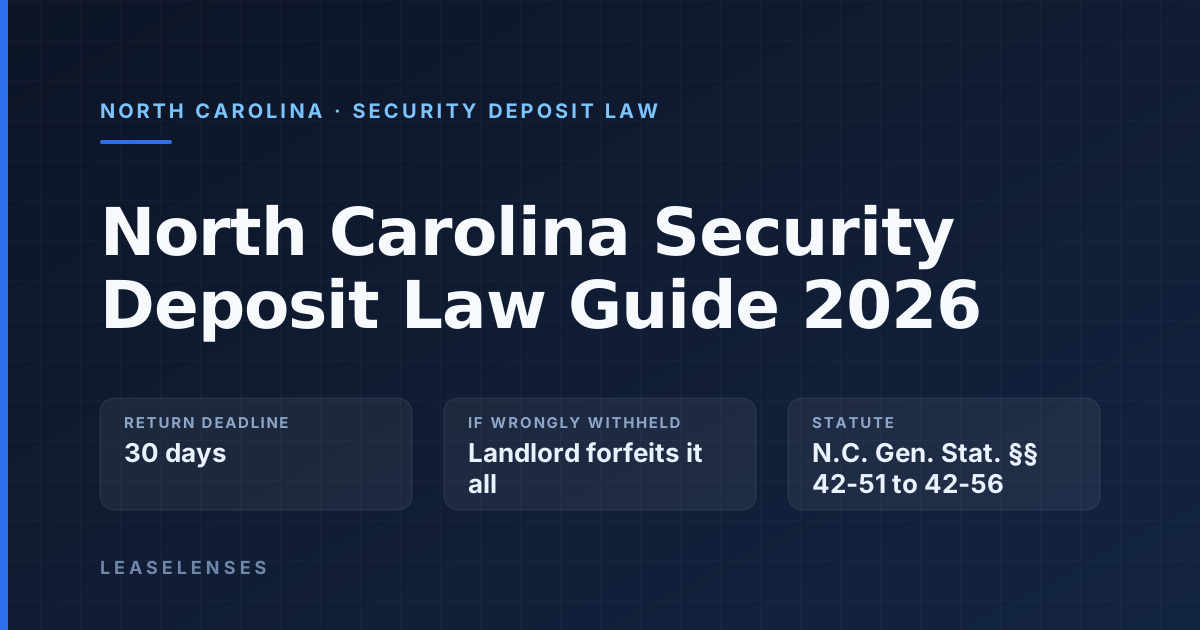
If you are signing, renewing, or moving out of a North Carolina lease, the security deposit clause is one of the easiest places to lose money. North Carolina security deposit law sets different deposit caps, a 30-day return rule, itemization requirements, and late-fee limits, but the practical risk usually comes from the exact words in your lease.
North Carolina's Residential Rental Agreements Act, codified in NC General Statutes §42-51 through §42-56, creates a framework for security deposit handling. Whether you are a tenant checking what can be withheld, a roommate comparing lease terms, or a small landlord updating a form, the useful question is not just "what does the law say?" It is "does this lease match the law?"
This guide walks through North Carolina security deposit law in 2026, from deposit limits based on lease terms to deduction procedures, late fee restrictions, and tenant remedies.
Upload your North Carolina lease to LeaseLenses and get a clause-level report for deposit limits, 30-day return language, $15 or 5% late-fee caps, the five-day grace period, and wording to question before you sign, renew, or move out.
North Carolina Security Deposit Limits: What Landlords Can Charge
North Carolina is unique in that security deposit limits vary based on the type and length of the lease agreement. Understanding these distinctions is crucial for compliance with North Carolina security deposit law.
Deposit Limits by Lease Term
Under NC General Statutes §42-51, the maximum security deposit a landlord can charge depends on the lease duration:
- Month-to-month tenancies: Maximum of 1.5 months' rent
- Leases longer than 2 months: Maximum of 2 months' rent
- Week-to-week tenancies: Maximum of 2 weeks' rent
These limits include any deposits collected for any purpose, including pet deposits, key deposits, or any other fees that serve to secure the landlord's interest. You cannot circumvent these limits by calling deposits by different names.
Pet Deposits and Additional Fees
While North Carolina allows landlords to charge reasonable pet deposits, these amounts count toward the overall security deposit limit. For example, if you're renting a property on a year-long lease and charge 2 months' rent as a security deposit, you cannot charge an additional pet deposit on top of that amount.
However, landlords can charge reasonable non-refundable pet fees separately if clearly disclosed in the lease as non-refundable. This must be explicitly stated in the rental agreement, and such fees are not returned at lease termination.
Consequences of Exceeding Deposit Limits
Landlords who charge deposits exceeding the statutory limits may face serious consequences:
- Required to immediately refund the excess amount to the tenant
- Loss of the right to retain any portion of the deposit for damages
- Potential liability for court costs and attorney fees
- Possible additional penalties under consumer protection laws
Always calculate your security deposits carefully and document them clearly in the lease agreement.
Security Deposit Return Requirements and Timeline
The return of security deposits is one of the most common sources of landlord-tenant disputes. North Carolina law provides clear guidelines to protect both parties.
The 30-Day Return Rule
Under NC General Statutes §42-52, landlords must return the tenant's security deposit within 30 days after the tenant vacates the property and surrenders possession. This deadline is firm and applies regardless of whether the landlord makes deductions.
The clock starts ticking when:
- The tenant has moved out completely
- All keys have been returned
- The tenant has provided a forwarding address
Landlords should send the deposit or itemization statement to the tenant's last known address or forwarding address via first-class mail.
Itemized Statement of Deductions
If a landlord intends to withhold any portion of the security deposit, they must provide a detailed itemized statement showing:
- Specific damages or cleaning issues
- The cost to repair or clean each item
- Any unpaid rent or fees
- The calculation showing how the deductions were determined
The statement must be clear and specific. Vague descriptions like "general cleaning" or "normal wear and tear" are insufficient and may result in the landlord losing the right to retain any deposit funds.
Permissible Deductions Under North Carolina Law
Landlords can only deduct from security deposits for specific reasons:
- Unpaid rent: Any rent owed for the tenancy period
- Damage beyond normal wear and tear: Broken fixtures, holes in walls, damaged flooring, etc.
- Unpaid utilities: If the lease makes the tenant responsible and they're unpaid
- Breach of lease: Costs associated with tenant violations of lease terms
- Unreasonable cleaning costs: Cleaning necessary beyond normal move-out cleaning
Importantly, landlords cannot deduct for:
- Normal wear and tear (faded paint, worn carpet, minor scuffs)
- Pre-existing damage
- Improvements or upgrades
- Damages caused by events beyond tenant control
Penalties for Failing to Return Deposits
If a landlord fails to return the security deposit or provide an itemized statement within 30 days, North Carolina law provides significant tenant protections. The tenant may be entitled to:
- Return of the full security deposit
- Damages equal to the amount wrongfully withheld
- Court costs and reasonable attorney fees
- Potential additional penalties under the North Carolina Tenant Security Deposit Act
Courts generally side with tenants when landlords fail to follow proper procedures, making timely compliance essential.
North Carolina Late Fee Restrictions and Grace Periods
In addition to security deposit rules, North Carolina landlord laws impose strict limitations on late fees—an area where many landlords inadvertently violate the law.
The 5-Day Grace Period Requirement
Under NC General Statutes §42-46, landlords cannot charge a late fee until 5 days after rent is due. This mandatory grace period applies to all residential leases, regardless of what the lease says.
For example, if rent is due on the 1st of the month, a landlord cannot charge a late fee until the 6th. Any lease provision attempting to shorten this grace period is void and unenforceable.
Maximum Late Fee Limits
North Carolina caps late fees at the greater of:
- $15, or
- 5% of the rent amount
For example:
- If monthly rent is $1,000, the maximum late fee is $50 (5%)
- If monthly rent is $200, the maximum late fee is $15 (not $10, because $15 is the minimum)
These limits apply per rental period, not per day. Landlords cannot charge daily late fees that accumulate beyond these maximums.
Lease Provisions on Late Fees
While your lease should specify late fee terms, those terms must comply with state law. Late fee clauses should:
- Clearly state when rent is due
- Acknowledge the 5-day grace period
- Specify the exact late fee amount (not exceeding statutory limits)
- Explain any procedures for paying late fees
Including a compliant late fee clause protects both parties and reduces disputes.
Documentation Requirements and Best Practices
Proper documentation is your best defense in security deposit disputes. North Carolina law places the burden of proof on the landlord to justify any deductions.
Move-In and Move-Out Inspections
Conducting thorough inspections is critical:
Move-In Inspection:
- Document the property's condition in detail
- Take dated, time-stamped photographs of every room
- Note any existing damage, no matter how minor
- Have the tenant sign the inspection report
- Provide the tenant with a copy
Move-Out Inspection:
- Conduct the inspection after the tenant vacates
- Compare the current condition to move-in documentation
- Take new photographs showing any damage
- Note items requiring cleaning or repair
- Calculate estimated repair costs
Photographic Evidence
In disputes, photographic evidence is invaluable. Best practices include:
- Use high-resolution photos with timestamps
- Photograph all rooms from multiple angles
- Take close-ups of any damage or wear
- Store photos securely with the tenant's file
- Consider video walkthroughs for additional documentation
Receipts and Invoices
For any deductions made from the security deposit, maintain:
- Original receipts for repairs or replacement items
- Invoices from contractors or cleaning services
- Estimates from licensed professionals
- Before and after photos of repairs
- Documentation of the reasonable cost of repairs
If you perform repairs yourself, document the time spent and charge only reasonable rates for labor comparable to what a professional would charge.
Free check · no account, no card
Check this against your own lease
This guide covers North Carolina's rules. The free check tells you which ones your lease actually meets, misses, or waives. Paste the clause here and keep reading — the verdict appears on this page.
Skip full upload for now
Paste one clause and get the first free verdict.
Use the exact wording about deposit, repairs, entry, notice, renewal, fees, waiver, or move-out. We keep this article's state-law context, show a free clause verdict first, and ask for payment only if the Action Packet is useful.
What the free verdict includes
Free verdict includes
What to paste
Paid packet adds
Exact clause proof · Preferred, fallback, and minimum wording · Likely reply, evidence to keep, deadline radar, and PDF export
Have the lease open?
Copy 2-6 sentences from the clause into the box. No file or card is needed for the first verdict.
Tenant Rights and Remedies Under North Carolina Law
North Carolina provides tenants with substantial rights and remedies when landlords violate security deposit laws.
Right to Pre-Move-Out Inspection
While not statutorily required in North Carolina, allowing tenants to participate in a pre-move-out inspection is considered best practice. This gives tenants an opportunity to:
- Identify issues that might result in deductions
- Correct minor problems before final inspection
- Understand what cleaning or repairs are needed
- Reduce disputes over the deposit
Legal Recourse for Tenants
If a landlord fails to return a security deposit properly, tenants can:
- Send a demand letter: Formally requesting return of the deposit with evidence
- File in small claims court: For amounts up to $10,000 in North Carolina
- Seek treble damages: In cases of willful wrongful retention
- Recover attorney fees: If they prevail in court
Sending a demand is not what triggers the rest of that list. Under §42-52 the duty to refund the balance or deliver an itemized statement within 30 days is the landlord's to perform, and it does not wait on a request from the tenant. What a dated written demand adds is a record — the address the landlord had, the day the deposit was still unreturned, and the exact sum in dispute — which are the same facts a small claims filing has to establish. A phone call can cover the same ground; a letter is what leaves a copy of it.
Willful Retention and Increased Damages
North Carolina law distinguishes between negligent and willful violations. If a court finds that a landlord willfully failed to return a security deposit or provide proper itemization, the tenant may recover:
- The full deposit amount
- Treble (triple) damages on the wrongfully withheld amount
- Court costs and reasonable attorney fees
This severe penalty underscores the importance of strict compliance with security deposit laws.
Check Your North Carolina Lease Before the Deposit Becomes a Dispute
Navigating North Carolina security deposit law with its varying limits, strict timelines, and detailed documentation requirements can be complex. LeaseLenses is most useful when you already have a lease in hand and want to know whether the clauses create real deposit, late-fee, or move-out risk.
Clause-Level Compliance Review
LeaseLenses reviews your lease text for North Carolina-specific issues:
- Verifies security deposit amounts don't exceed 1.5 or 2 month limits
- Checks late fee provisions comply with $15 or 5% caps
- Ensures grace period language includes mandatory 5-day requirement
- Flags missing or improper deposit itemization clauses
- Identifies provisions that may violate North Carolina law
- Explains what each flagged clause could cost and what to ask before signing or paying
Upload your lease to LeaseLenses for an AI lease action packet you can use before a deposit dispute becomes a court problem.
Security Deposit Calculator
Our free security deposit calculator helps you determine the correct maximum deposit based on:
- Monthly rent amount
- Lease term (month-to-month vs. fixed term)
- North Carolina-specific limits
This ensures you never accidentally charge more than allowed under state law.
Deadline Tracking and Reminders
LeaseLenses automatically tracks critical deadlines, including:
- 30-day security deposit return deadline
- Lease renewal dates
- Rent increase notice requirements
- Annual inspection schedules
Our calendar integration and automated alerts ensure you never miss a deadline that could result in penalties.
Report Export for Negotiation or Records
After analysis, keep the result as a practical decision packet:
- Clause risks explained in plain English
- State-law checks tied to North Carolina rules
- Suggested wording or questions to send to the other side
- PDF export for your records, roommate review, or negotiation notes
This is the paid value proposition: not another generic legal article, but a review of the lease you are about to sign, renew, enforce, or dispute.
For comprehensive information about North Carolina rental regulations, visit our North Carolina state law page.
Frequently Asked Questions About North Carolina Security Deposit Law
Q1: Can a North Carolina landlord charge a non-refundable deposit?
Non-refundable fees must be explicitly labeled as such in the lease. Security deposits themselves must be refundable. However, landlords can charge non-refundable pet fees or other fees if clearly disclosed, though these still count toward determining if excessive deposits are being charged.
Q2: What happens if a landlord doesn't return my deposit within 30 days in North Carolina?
If the landlord fails to return your deposit or provide an itemized statement within 30 days, you may sue in small claims court for the full deposit amount, plus potential damages, court costs, and attorney fees. If the retention was willful, you may recover treble damages.
Q3: Can landlords charge for carpet cleaning in North Carolina?
Only if the carpet requires cleaning beyond normal wear and tear. Normal use that causes gradual wearing or fading cannot be charged to the tenant. However, stains, burns, or excessive damage can be deducted from the security deposit.
Q4: How much can a North Carolina landlord charge for late fees?
The greater of $15 or 5% of the monthly rent, and only after a 5-day grace period from the due date. Any higher amounts or shorter grace periods violate state law and are unenforceable.
Q5: Does North Carolina require security deposits to be held in a separate account?
No. Unlike some states, North Carolina doesn't require landlords to hold security deposits in separate or interest-bearing accounts. However, landlords must be able to return deposits when required by law.
Conclusion: Mastering North Carolina Security Deposit Compliance
Understanding North Carolina security deposit law matters before money is withheld, not after. From the variable deposit limits based on lease terms (1.5 months for month-to-month, 2 months for longer leases) to the strict 30-day return requirement and late fee restrictions ($15 or 5% maximum, 5-day grace period), North Carolina creates clear rules that protect both landlords and tenants.
The hard part is connecting those rules to your actual lease. A clause can make a deposit seem nonrefundable, hide an excessive late fee, skip the grace period, or describe deductions so vaguely that both sides are set up for a dispute.
LeaseLenses turns the lease text into a practical decision packet: flagged clauses, North Carolina rule checks, money-at-stake explanations, suggested wording, and PDF export for your records or negotiation notes.
Ready to check the exact lease instead of guessing from a generic summary? Upload your North Carolina lease to LeaseLenses and review the deposit, deduction, late-fee, and move-out clauses before you sign, renew, enforce, or pay.
Turn this guide into your lease gap checklist
North Carolina deposit check: cap, trust account, deductions, pet fee, and 30-day return
Upload the lease and preview whether North Carolina deposit-limit, trust-account, permitted deduction, pet-fee, and 30-day itemization language appears before paying.
The free check runs first — no credit card. You only ever pay if the findings are worth keeping.
Security deposit terms LeaseLenses should verify in your lease
Readers searching deposit law usually need to know whether their actual clause is enforceable, not just the statewide rule.
- Deposit amount, extra pet deposits, and prepaid charges
- Return deadline, itemized deduction language, and forwarding-address requirements
- Move-in condition, interest/account handling, and dispute wording
Ready to compare this North Carolina deposit guide with your lease?
Sign in once, then choose your lease. The free preview shows whether deposit cap, trust-account, deduction, pet-fee, or 30-day return language appears in the document; unlock the action packet from $9.99 only if it helps.