Illinois Eviction Notice Requirements: A Step-by-Step Landlord's Handbook
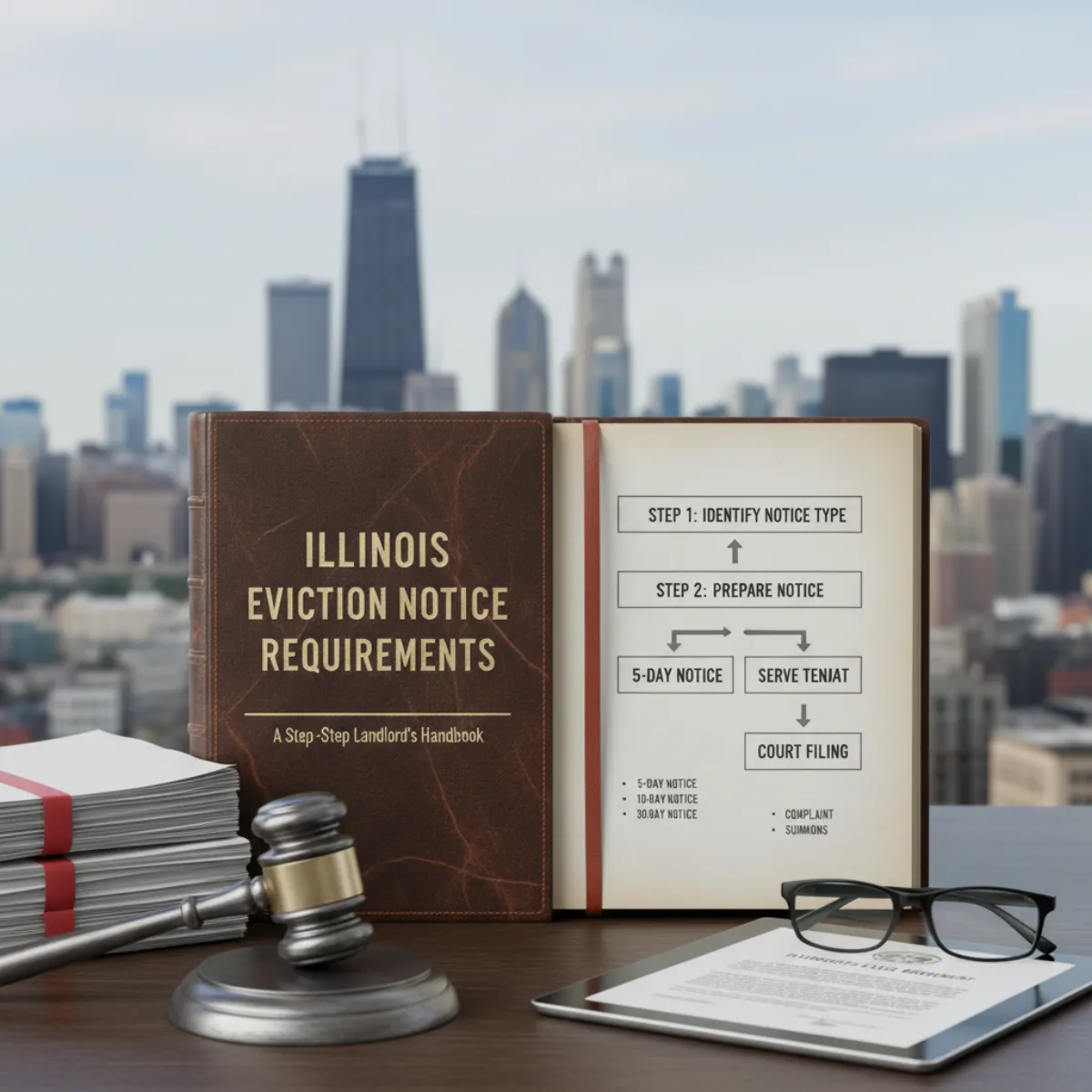
Navigating Illinois eviction notice requirements can feel like walking through a legal minefield, even for experienced small landlords. The state's landlord-tenant laws are complex, with specific rules governing everything from proper notice delivery to the exact wording required on a notice. A single misstep can lead to significant delays, costly legal fees, and even the dismissal of your eviction case, forcing you to start the entire eviction process Illinois all over again.
For small landlords managing 2-20 properties, saving time and avoiding legal pitfalls is crucial. This comprehensive handbook is designed to simplify the complexities of Illinois eviction notices, providing you with a clear, step-by-step guide to ensure compliance and protect your investment. We'll break down the different types of notices, explain proper delivery methods, outline critical timelines, and reveal how modern tools can help you avoid common legal errors. By understanding these requirements, you can navigate the eviction process with confidence and competence.
Types of Eviction Notices in Illinois & When to Use Them
Before you can initiate the eviction process Illinois, you must first serve the tenant with a proper eviction notice. The type of notice you use depends entirely on the reason for the eviction. Understanding these distinctions is fundamental to complying with Illinois landlord tenant law. Choosing the wrong notice or failing to include essential information will invalidate your eviction attempt.
The Essential 5-Day Notice (Non-Payment of Rent)
This is the most common type of eviction notice. In Illinois, if a tenant fails to pay rent when due, you can serve them a 5-day notice. This notice informs the tenant they have five days to either pay the overdue rent (plus any late fees explicitly allowed in the lease) or move out of the property. This is a "cure or quit" notice, meaning the tenant can stop the eviction process by paying all outstanding rent within the five-day period.
- Key Requirement: The notice must clearly state the exact amount of rent due, the period for which it's due, and that the tenant has five days to pay or surrender possession of the premises.
- When to Use: Exclusively for non-payment of rent.
The 10-Day Notice (Lease Violation)
When a tenant violates a term of the lease agreement other than non-payment of rent, you typically use a 10-day notice. This could include unauthorized pets, excessive noise, property damage, or subletting without permission. Unlike the 5-day notice, the 10-day notice can be "curable" or "non-curable," depending on the nature of the violation and your lease terms.
- Curable Violations: The notice might give the tenant 10 days to fix the violation (e.g., remove an unauthorized pet, clean up excessive trash) or face eviction.
- Non-Curable Violations: For severe or repeated violations where the lease specifies no opportunity to cure, the notice may simply demand possession within 10 days. Always consult your lease and local ordinances carefully.
- When to Use: For breaches of the lease agreement, other than non-payment.
The 30-Day Notice (Month-to-Month Tenancy Termination)
For tenants on a month-to-month lease, you can terminate the tenancy without fault, provided you give appropriate notice. In Illinois, this typically requires a 30-day notice. This notice doesn't accuse the tenant of wrongdoing but simply states your intent to end the tenancy.
- Key Requirement: The notice must specify the date by which the tenant must vacate, which must be at least 30 days after the notice is served and align with the end of a rental period.
- When to Use: To end a month-to-month tenancy, often when you plan to sell the property, move in, or simply no longer wish to rent to that specific tenant (provided it's not for discriminatory reasons).
Notice of Immediate Termination (Serious Violations)
In rare and severe circumstances, Illinois law allows for an immediate termination of tenancy without a cure period. This applies to situations involving illegal drug activity, severe property damage, criminal acts, or other egregious lease violations that pose an immediate threat to the property or other tenants.
- When to Use: Only for the most serious violations where state or local law explicitly permits immediate termination. This notice often means the landlord can file for eviction immediately after service if the tenant does not vacate.
Crafting a Legally Compliant Illinois Eviction Notice
Serving an Illinois eviction notice is more than just telling a tenant to leave; it's a critical legal document that must adhere to strict formatting and content requirements. Any deviation can render your notice invalid, causing significant delays in the eviction process Illinois. Precision and clarity are paramount to protect your rights as a landlord.
Essential Information Every Notice Must Contain
To be legally enforceable, an eviction notice in Illinois must include several key pieces of information. Missing even one item can be grounds for dismissal in court.
- Tenant's Full Name(s): All named tenants on the lease must be included.
- Property Address: The full and correct address of the rental unit, including apartment number if applicable.
- Reason for Eviction: Clearly state the specific lease violation or reason for termination (e.g., "Failure to pay October 2026 rent," "Unauthorized pet," "Termination of month-to-month tenancy").
- Specific Dates:
- The date the notice is issued.
- The exact date by which the tenant must comply (pay rent, cure violation) or vacate the premises. This date must account for the statutory notice period (e.g., 5 days, 10 days, 30 days).
- Amount Due (for 5-day notices): State the exact amount of past-due rent and any legally permissible late fees.
- Statement of Consequences: Clearly state that if the tenant does not comply by the specified date, further legal action (an eviction lawsuit) will be filed to recover possession of the property.
- Landlord's Signature and Contact Information: Your printed name, signature, and contact information.
Best Practices for Clarity and Specificity
Beyond the required information, how you phrase your notice can also impact its legal standing and effectiveness. Ambiguity can be exploited by tenants or scrutinized by judges.
- Be Specific: Instead of "various lease violations," specify "Unauthorized dog in violation of Paragraph 7 of your lease agreement" or "Repeated noise disturbances between 1 AM and 3 AM on October 1st, 3rd, and 5th, 2026, in violation of Paragraph 9 of your lease."
- Cite Lease Clauses: If the violation relates to a specific clause in your lease, reference it by number or section. This strengthens your case and clearly points to the breached agreement.
- Avoid Emotional Language: Stick to factual statements. Legal documents should be objective and professional, not accusatory or confrontational.
- Keep a Copy: Always make at least two copies of the signed notice. One for your records and one for filing with the court if necessary.
For landlords juggling multiple properties, ensuring every notice is perfectly drafted can be a burden. Automated tools can significantly reduce the risk of errors. If you're looking for an efficient way to manage various compliance requirements, including disclosure obligations, you might find valuable insights in articles like Essential Landlord Disclosure Requirements: Protecting Yourself & Your Tenants.
Proper Notice Delivery, Timelines & Legal Procedures
Serving an Illinois eviction notice correctly is just as important as drafting it accurately. Even a perfectly worded notice can be deemed invalid if not delivered according to Illinois landlord tenant law. Understanding the accepted methods of service and precisely calculating timelines is crucial for advancing the eviction process Illinois.
Accepted Methods of Service
Illinois law specifies several acceptable methods for serving an eviction notice. You cannot simply slide a notice under a door and expect it to be legally sufficient in all cases.
- Personal Service: This is the most preferred and strongest method. The notice is handed directly to the tenant. If there are multiple tenants, each named tenant should ideally receive their own copy. A third-party witness can attest to the service.
- Certified Mail with Return Receipt Requested: Sending the notice via certified mail provides proof of mailing and proof of receipt (or attempted receipt). The date the tenant signs for the mail (or the date of the first attempted delivery) is typically considered the service date.
- Substituted Service (or "Posting" and "Regular Mail"): If personal service is unsuccessful and the tenant is absent from the premises, you may be able to post the notice on the main entrance of the dwelling unit. This method usually requires sending an additional copy via regular first-class mail as well. Always check local ordinances, as some jurisdictions have specific rules for posting.
- Leaving with an Occupant: In some cases, the notice can be left with a person aged 13 or older who lives at the premises. Ensure this person is likely to inform the tenant.
- Important Note: Regardless of the method, document everything. Take photos if posting, keep certified mail receipts, and make notes of dates, times, and witnesses.
Understanding Key Timelines
The clock starts ticking the moment a notice is properly served. Miscalculating these timelines can lead to significant delays.
- Day 1: The day after the notice is served is generally considered Day 1 of the notice period. For example, if a 5-day notice is served on a Monday, Day 1 is Tuesday, and the tenant has until the end of Saturday to comply or vacate.
- Weekends and Holidays: Generally, weekends and holidays count towards the notice period. However, if the last day of the notice period falls on a weekend or legal holiday, the deadline is typically extended to the next business day. Always double-check current Illinois civil procedure rules or consult legal counsel for exact calculations, especially with shorter notices.
- Filing for Eviction: You cannot file a "Forcible Entry and Detainer" (eviction) lawsuit until after the notice period has fully expired and the tenant has failed to comply or vacate. Filing prematurely will result in dismissal.
Beyond the Notice: Filing an Eviction Lawsuit
Once the notice period expires and the tenant has not remedied the situation or moved out, you can proceed with filing an eviction lawsuit in your local circuit court. This involves:
- Filing a Complaint: Submitting a "Complaint for Forcible Entry and Detainer" with the court clerk.
- Summons: Having the court issue a summons, which must then be served on the tenant by a sheriff or process server.
- Court Hearing: Attending court hearings where you present your case, including proof of proper notice and lease violations.
- Judgment for Possession: If successful, the court will issue an order granting you possession of the property.
- Sheriff's Enforcement: Only a sheriff can physically remove a tenant if they still refuse to leave after a judgment is issued. Self-help evictions (changing locks, turning off utilities) are illegal in Illinois.
Avoiding Legal Errors in IL Evictions with Automated Checks
The intricacies of Illinois eviction notice requirements make the process prone to error. Even minor mistakes, like an incorrect date or an improperly served notice, can invalidate your efforts and force you to restart, costing valuable time and money. For small landlords, manually sifting through lease terms and state statutes for every eviction scenario is inefficient and risky.
Pitfalls Landlords Often Miss
Many landlords, even those with good intentions, fall victim to common errors during the eviction process Illinois:
- Incorrect Notice Type: Using a 10-day notice for non-payment of rent instead of a 5-day notice, or vice-versa.
- Improper Service: Not adhering to the legal methods of delivery, or failing to document service adequately.
- Calculation Errors: Miscounting the notice period, especially around weekends and holidays, leading to premature filing of the lawsuit.
- Missing Specificity: Generic descriptions of lease violations that don't hold up in court.
- Ignoring Local Ordinances: Failing to account for stricter local Illinois landlord tenant law regulations, such as those in Chicago under the Residential Landlord and Tenant Ordinance (RLTO), which can mandate longer notice periods or specific language.
- Incomplete Lease Documentation: Lacking a solid lease agreement that clearly defines terms, responsibilities, and consequences of violations.
The Role of AI in Lease & Compliance Audits
This is where technology becomes an invaluable asset. AI-powered tools, like LeaseLens, are specifically designed to help small landlords avoid these common pitfalls by providing automated checks and ensuring compliance. Instead of manually reviewing every clause and cross-referencing state laws, you can leverage AI to do the heavy lifting.
LeaseLens, for example, can:
- Extract Key Terms: Quickly pull out essential information from your lease documents, such as tenant names, rent amounts, due dates, and specific clauses related to violations and notices.
- Identify Missing Clauses & Risks: Alert you to any crucial clauses that might be missing from your lease, which could weaken your position during an eviction.
- State-Specific Compliance Checking: Crucially, LeaseLens can cross-reference your lease terms against Illinois landlord tenant law and local regulations (like the Chicago RLTO), highlighting potential non-compliance before issues arise. This is similar to how it helps landlords in other states navigate complex rules, for instance, with California Security Deposit Return Law 2026: Landlord's Essential Guide or Florida Security Deposit Rules: What Every Landlord Needs to Know (2026 Update).
- Generate Reminders: Set up calendar reminders for critical dates, ensuring you never miss a deadline for serving notices or filing paperwork.
By using an AI lease auditor, you gain confidence that your eviction notices are not only compliant with Illinois eviction notice requirements but are also supported by a robust and legally sound lease agreement. This proactive approach saves you time, reduces legal risks, and protects your property investment. Discover how AI is transforming landlord operations by reading more about LeaseLens: The Future of AI Lease Audit Software for Property Managers.
Special Considerations: Rent Control & Local Ordinances
While this guide covers general Illinois eviction notice requirements, it's critical for landlords to be aware that specific cities and counties within Illinois may have their own landlord-tenant ordinances that supersede or add to state law. Ignoring these local rules can quickly derail your eviction process Illinois.
Chicago Residential Landlord and Tenant Ordinance (RLTO)
Chicago is a prime example of a municipality with its own comprehensive landlord-tenant laws, known as the Residential Landlord and Tenant Ordinance (RLTO). If your rental property is located within Chicago, the RLTO imposes stricter requirements on landlords than statewide law, including:
- Longer Notice Periods: In many cases, the RLTO requires longer notice periods for lease violations or terminations than the statewide 5, 10, or 30-day standards. For example, for a month-to-month tenancy, depending on the length of occupancy, landlords might need to provide 60 or even 120 days' notice.
- Specific Lease Disclosures: The RLTO mandates certain disclosures to tenants at the beginning of a tenancy, including a summary of the ordinance itself.
- Rules for Security Deposits: Stricter regulations on how security deposits must be handled, including interest payments and deadlines for return.
- Damages for Non-Compliance: Penalties for landlords who fail to comply with the RLTO can be significant, often allowing tenants to recover substantial damages.
Landlords with properties in Chicago must familiarize themselves thoroughly with the RLTO. Relying solely on general state law for the eviction process Illinois when operating in Chicago is a common and costly mistake. Always check if your property falls under such local ordinances.
Frequently Asked Questions About Illinois Eviction Notices
Navigating the complexities of Illinois eviction notice requirements can raise many questions for landlords. Here are answers to some of the most common inquiries to help clarify the process.
Q: Can I use email or text message to serve an Illinois eviction notice?
A: Generally, no. Illinois law specifies acceptable methods of service, which typically include personal service, certified mail, or posting with regular mail. Email or text message is usually not considered legally sufficient unless explicitly agreed upon in a lease and allowed by specific local ordinances, which is rare for formal eviction notices.
Q: What happens if I make a mistake on the eviction notice?
A: A mistake on an Illinois eviction notice can be detrimental. Depending on the nature of the error (e.g., wrong dates, incorrect rent amount, improper service), the notice could be deemed invalid, forcing you to re-serve a new notice and restart the entire waiting period. This leads to significant delays and additional costs.
Q: How long does the eviction process take in Illinois?
A: The overall eviction process Illinois varies greatly depending on the type of notice, tenant cooperation, court backlog, and whether the tenant contests the eviction. After serving notice, it can take anywhere from a few weeks to several months from filing the lawsuit to actually regaining possession of the property.
Q: Do I need a lawyer for an Illinois eviction?
A: While you can technically represent yourself in court (pro se), navigating the Illinois eviction notice requirements and the subsequent legal process is highly complex. A single misstep can be costly. It is strongly recommended that landlords consult with or hire an attorney experienced in Illinois landlord-tenant law to ensure proper procedure and protect their interests.
Conclusion
Understanding and meticulously following Illinois eviction notice requirements is not merely a formality; it's a fundamental aspect of protecting your investment and ensuring a smooth, legal resolution to tenancy issues. The eviction process Illinois is fraught with potential pitfalls, from selecting the wrong notice type to procedural errors in service or calculation. Any deviation from Illinois landlord tenant law can lead to significant delays, added expenses, and ultimately, the loss of your case.
For small landlords, efficiency and accuracy are paramount. Leveraging modern solutions that can parse your lease documents, verify compliance with state and local regulations, and provide timely reminders can be a game-changer. Don't let the complexities of the law undermine your efforts. Ensure every step you take is informed, precise, and legally sound.
Take control of your lease agreements and compliance. Avoid costly mistakes and streamline your property management by leveraging the power of AI. Explore LeaseLens Pricing Plans today and see how our AI-powered lease auditor can safeguard your properties and empower you with confidence.