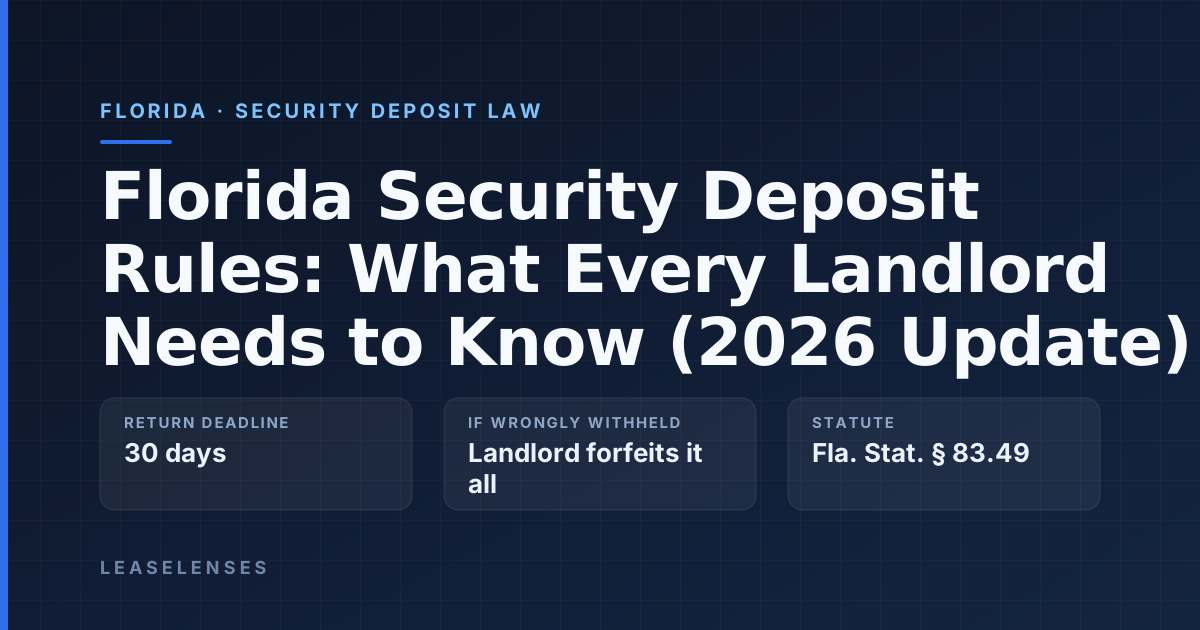
Florida Security Deposit Rules: What Every Landlord Needs to Know (2026 Update)
Deposit still missing or deductions disputed?
Enter your move-out details to preview a demand letter with state-law references. Pay only to unlock the full letter and PDF; no lease upload or account needed.
Free preview · $19 once for the full PDF
Navigating the complexities of Florida security deposit rules can feel like deciphering a cryptic code. For landlords across the Sunshine State, understanding these regulations isn't just about good practice—it's a critical shield against potential legal disputes and financial losses. With updates and interpretations evolving, staying current with Florida landlord tenant law, particularly concerning F.S. 83.49, is non-negotiable for property owners and managers.
This comprehensive guide will break down the essential aspects of Florida's security deposit regulations for 2026. We'll cover everything from how to properly hold a deposit to the precise steps for lawful deductions and the critical deadlines for returning funds. By the end, you'll have a clear roadmap to ensure full compliance, protect your investment, and foster positive tenant relationships. Let's dive into the specifics that can save you hours of headaches and thousands in potential legal fees.
Florida's Deposit Holding & Return Requirements Explained
Florida Statute 83.49 sets the framework for how landlords must handle security deposits. Unlike some states, Florida offers specific guidance that, if not followed meticulously, can lead to landlords forfeiting their right to claim any portion of the deposit, even for legitimate damages. Understanding these initial holding and return requirements is foundational to compliant property management in Florida.
Proper Holding of Security Deposits
When you collect a security deposit in Florida, you have three distinct options for holding those funds. Your choice impacts how you must notify the tenant and how interest (if any) is handled.
- Non-Interest-Bearing Account (Non-Commingled): This is the most common and often simplest method. You can hold the security deposit in a separate, non-interest-bearing checking or savings account in a Florida banking institution. The key here is "non-commingled," meaning you cannot mix these funds with your personal funds or other operational accounts. This account must be used solely for security deposits. No interest needs to be paid to the tenant under this option.
- Interest-Bearing Account (Non-Commingled): Similar to the above, you can place the deposit in a separate, interest-bearing account. If you choose this option, you are required to pay the tenant 75% of the interest earned annually, or 5% simple interest per year, whichever the tenant chooses. This requires more administrative effort to calculate and disburse interest.
- Surety Bond: A less common but available option is to post a surety bond with the clerk of the circuit court in the county where the rental property is located. The bond must be for the total amount of the security deposits held, or $50,000, whichever is less. This bond must be for the benefit of the tenants. If this option is chosen, the landlord must pay the tenant interest on the security deposit at a rate of 5% per year.
Regardless of the method chosen, you must provide written notice to your tenant within 30 days of receiving the security deposit. This notice must specify where the deposit is being held and whether the tenant is entitled to interest. Failing to provide this notice within the 30-day window can result in the forfeiture of your right to claim any portion of the security deposit.
Calculator handoff for Florida deposit timelines
Use the security deposit calculator as the practical next step before sending a Florida deposit notice. The calculator keeps the no-statewide-cap context separate from the 15-day return and 30-day claim workflow, then routes landlords back into the state guide for certified-mail and dispute documentation checks.
The Critical 15/30-Day Notice Rule
One of the most frequently misunderstood, and therefore mismanaged, aspects of Florida security deposit rules revolves around the 15 and 30-day notice periods post-tenancy. This is where many landlords unwittingly run into legal trouble.
Upon a tenant vacating the premises, you have a strict timeline to either return the deposit or provide notice of your intent to make a claim against it:
- 15 Days to Return: If you do not intend to make a claim on any portion of the security deposit, you must return the full amount to the tenant within 15 days after the tenant vacates the premises. There is no requirement for written notice if you are returning the full amount.
- 30 Days to Impose Claim: If you do intend to make a claim on any portion of the security deposit (e.g., for damages beyond normal wear and tear, unpaid rent, or cleaning fees specified in the lease), you must send the tenant a written notice of your intention to impose a claim within 30 days after the tenant vacates. This notice must be sent via certified mail to the tenant's last known mailing address. It must clearly state the reasons for imposing the claim and the amount you intend to deduct.
Failure to send this notice of intent to impose a claim within the 30-day window means you forfeit your right to claim any portion of the security deposit, and you must return the full amount to the tenant. This is a strict deadline with severe consequences for non-compliance.
Returning the Deposit: Timelines and Best Practices
Once you've decided whether to return the full deposit or make a claim, adherence to the timeline is paramount. If you've sent a timely notice of intent to claim, the tenant then has 15 days from the date they receive that notice to object in writing.
If the tenant does not object within 15 days, you are free to deduct the claimed amount and return the remaining balance (if any) to the tenant. If the tenant does object, the matter effectively becomes a dispute, and you may need to file an action in court for a declaratory judgment to determine your right to the deposit, or the tenant may initiate litigation.
To protect yourself, always:
- Document the condition of the property before move-in (photos, videos, move-in checklist).
- Document the condition of the property immediately after move-out.
- Keep detailed receipts for any repairs or cleaning expenses claimed.
- Send all official communications via certified mail with a return receipt requested. This provides irrefutable proof of mailing and delivery dates.
Adhering to these strict timelines and documentation practices is your best defense in any security deposit dispute. Staying on top of general Essential Landlord Disclosure Requirements: Protecting Yourself & Your Tenants can also prevent many common issues before they escalate.
Free check · no account, no card
Check this against your own lease
This guide covers Florida's rules. The free check tells you which ones your lease actually meets, misses, or waives. Paste the clause here and keep reading — the verdict appears on this page.
Skip full upload for now
Paste one clause and get the first free verdict.
Use the exact wording about deposit, repairs, entry, notice, renewal, fees, waiver, or move-out. We keep this article's state-law context, show a free clause verdict first, and ask for payment only if the Action Packet is useful.
What the free verdict includes
Free verdict includes
What to paste
Paid packet adds
Exact clause proof · Preferred, fallback, and minimum wording · Likely reply, evidence to keep, deadline radar, and PDF export
Have the lease open?
Copy 2-6 sentences from the clause into the box. No file or card is needed for the first verdict.
Allowable Deductions, Notice Periods & Disputes
Understanding what you can legitimately deduct from a security deposit and the precise procedural steps is crucial for any Florida landlord. Arbitrary deductions are a common cause of disputes and legal action. This section clarifies what constitutes a valid deduction and outlines the process for handling disagreements.
What Can (and Cannot) Be Deducted
The purpose of a security deposit is to protect the landlord from financial losses due to a tenant's failure to meet their obligations under the lease. In Florida, typical allowable deductions include:
- Unpaid Rent: If the tenant vacates before the lease ends and owes rent, or fails to pay rent for the final month(s) as per the lease terms.
- Damages Beyond Normal Wear and Tear: This is often the most contentious area. "Normal wear and tear" refers to the deterioration that occurs with regular use over time, like minor scuffs on walls, faded carpets, or loose door handles. Damages beyond this include holes in walls, broken fixtures, stained carpets, pet damage, or excessive dirtiness requiring professional cleaning beyond what's reasonable.
- Unpaid Utilities: If the lease specifies that the tenant is responsible for utilities and they leave unpaid balances, these can sometimes be deducted if the landlord is liable for them.
- Breach of Lease Terms: Other breaches of the lease agreement that result in financial loss to the landlord (e.g., unauthorized pets requiring additional cleaning, early termination fees if specified in the lease and legally enforceable).
What you cannot deduct for includes:
- Normal Wear and Tear: As explained, this is part of owning a rental property.
- Pre-existing Damage: Damage that was present before the tenant moved in (which is why move-in checklists and photos are so vital).
- Improvements: Upgrades or renovations that benefit the landlord, not repairs for tenant-caused damage.
- Illegal Clauses: Deductions based on lease clauses that violate Florida law.
It's critical that your lease agreement clearly outlines the tenant's responsibilities and what constitutes damage versus normal wear and tear. A well-drafted lease is your first line of defense.
Notice of Intent to Impose Claim on Security Deposit
As highlighted earlier, the 30-day notice is non-negotiable. This notice must be sent via certified mail, return receipt requested, to the tenant’s last known mailing address. The content of the notice is equally important:
- Clear Statement of Intent: Explicitly state that you intend to impose a claim on the security deposit.
- Amount of Claim: Specify the exact dollar amount you intend to deduct.
- Reason for Claim: Provide a detailed itemization of the reasons for the claim. For example, "Repair of large hole in living room wall: $150," "Professional carpet cleaning due to pet stains: $200," "Unpaid March 2026 rent: $1,200." Vague statements like "damages" are insufficient.
- Tenant's Right to Object: Inform the tenant that they have 15 days from the date of receipt of your notice to object in writing to the deduction.
- Landlord's Contact Information: Provide your contact details for any communication.
Missing any of these elements, or failing to use certified mail, can invalidate your claim and require you to return the full deposit. This rigorous process underscores why accurate and compliant lease agreements are paramount.
Tenant’s Right to Object and Dispute Resolution
Once the tenant receives your notice of intent to impose a claim, they have 15 days to respond in writing, objecting to the deduction. If they do not object within 15 days, they essentially waive their right to dispute the claim, and you can proceed with the deductions.
If the tenant does object within the 15-day window, the security deposit becomes a disputed fund. At this point, several avenues may be pursued:
- Negotiation: You and the tenant can attempt to negotiate a mutually agreeable resolution. This is often the quickest and least expensive path.
- Mediation: A neutral third party can help facilitate a discussion and assist in reaching a settlement.
- Small Claims Court: If an agreement cannot be reached, either you or the tenant may file a lawsuit in small claims court (for amounts generally up to $8,000 in Florida) to have a judge decide the matter. In such cases, the burden of proof for the deductions rests on the landlord. Strong documentation (photos, receipts, move-in/move-out checklists) is your most valuable asset.
Understanding the specific legal procedures for each state, such as those related to Texas Landlord Tenant Law Simplified: Your 2026 Compliance Checklist or California Security Deposit Return Law 2026: Landlord's Essential Guide, highlights the importance of precise legal adherence across different jurisdictions. These types of disputes can be time-consuming and costly, making proactive compliance and clear communication essential.
F.S. 83.49 runs the other way when it is your own deadline that slips. Those 30 days run from the tenant's vacating of the premises on termination of the lease — the move-out, not a date on the lease — and letting them close without the notice the statute requires (written, sent by certified mail to the tenant's last known mailing address, stating the amount and the reason for the claim in substantially the statutory form, which gives the tenant 15 days to object in writing) forfeits your right to impose a claim on the deposit or seek a setoff against it; you may still sue for damages, but only after returning the deposit (§ 83.49(3)(a)). Nothing in the statute makes a tenant demand the money first, so no warning shot is coming. The statute gives you one relief: under § 83.49(5), a tenant who leaves before the lease term ends, or leaves a periodic tenancy, without seven days' written notice that includes an address relieves you of that notice requirement — though not of the tenant's right to the deposit itself. The practical defense is to draft the notice of intention to impose a claim in the first week rather than the last, while the move-out photos and invoices are still in front of you.
What a Florida Lease Check Can Save You
Florida Statute 83.49 puts the hard deadline on your landlord, not on you. If no written notice of intent to impose a claim goes out by certified mail within 30 days after you vacate, the landlord forfeits the right to claim any portion of your security deposit and must return the full amount — even where there was real damage. If a claim notice does arrive, you have 15 days from receiving it to object in writing. Lease clauses are routinely written to blur both of those clocks:
- A return window longer than the statute. A lease promising your deposit back "within 45 or 60 days" quietly stretches F.S. 83.49's 30-day claim deadline by another two weeks to a month, and makes the forfeiture rule look like it never applies. The statutory clock is the one that counts.
- A shortened objection window. F.S. 83.49 gives you 15 days from receipt of the claim notice to object in writing. A clause cutting that to 5 or 7 days pressures you into missing it — and a missed objection lets the landlord take the deduction unchallenged.
- Notice by email, text, or door-posting. The statute requires the notice of intent to impose a claim to go by certified mail to your last known mailing address. A clause substituting a cheaper method means the notice can land somewhere you never see it while your 15-day objection clock runs out.
- The deposit relabeled as last month's rent. Florida's deposit exists to cover unpaid rent or damage beyond normal wear and tear after you vacate. A clause converting it to prepaid rent can strip out the 15/30-day return machinery entirely.
- Blanket cleaning and "wear" deductions. Normal wear and tear — minor scuffs, faded carpet, loose door handles — is not deductible, and neither is pre-existing damage or an upgrade that benefits the owner. A lease that pre-authorizes a flat carpet or repaint charge is billing you for exactly those.
- A silent interest clause. If your deposit sits in an interest-bearing account you are owed 75% of the annualized interest or 5% simple interest per year, whichever you choose; under a surety bond it is 5% per year. A lease that never says how the deposit is held never tells you which one you are owed.
If a deduction ends up disputed, the burden of proving it rests on the landlord, and Florida small claims handles amounts generally up to $8,000. Knowing which clause is unenforceable before you sign — or before you write your objection letter — is the difference between arguing from your lease and arguing from the statute.
Check your Florida lease free — no account required. The preview counts the clauses that would cost you money and names them; unlocking adds the full clause text, a suggested rewrite for each, and dated calendar reminders for your move-out and deposit deadlines.
Frequently Asked Questions About Florida Security Deposit Rules
Navigating Florida's specific landlord-tenant statutes can bring up many questions. Here are some of the most common inquiries regarding security deposits in Florida.
Q1: Can I use a security deposit to cover the last month's rent in Florida?
A1: Generally, no. Florida Statute 83.49 states that a security deposit is intended to cover damages beyond normal wear and tear or unpaid rent after the tenant vacates. It's not typically allowed to be applied as the last month's rent unless there's a specific, written agreement in the lease that clearly designates it as such, or if the tenant and landlord agree to this arrangement at the end of the tenancy. Most leases explicitly state the security deposit cannot be used as rent.
Q2: What happens if I don't return the security deposit or send a notice of claim within 30 days in Florida?
A2: If you, as the landlord, fail to return the security deposit in full or send a written notice of your intent to impose a claim within 30 days after the tenant vacates, you forfeit your right to claim any portion of the security deposit. In this scenario, you must return the entire security deposit amount to the tenant, even if there were legitimate damages or unpaid rent. This 30-day deadline is strict and has serious consequences for non-compliance.
Q3: Do I have to pay interest on a security deposit in Florida?
A3: It depends on how you choose to hold the security deposit. If you hold the deposit in a separate, non-interest-bearing account, you are not required to pay interest. However, if you hold the deposit in an interest-bearing account, you must pay the tenant 75% of the annualized interest or 5% simple interest per year, whichever they choose. If you post a surety bond, you must pay 5% interest per year. Always notify the tenant within 30 days of receiving the deposit about how it's being held and whether they are entitled to interest.
Conclusion
Mastering the Florida security deposit rules is more than just good business practice—it's a critical legal obligation that protects your investment and prevents costly disputes. From the precise methods for holding deposits and the strict 15/30-day notice periods to understanding allowable deductions and managing potential disagreements, adherence to F.S. 83.49 is paramount. Ignoring these regulations can lead to the forfeiture of your right to claim damages, even for legitimate repairs, and can result in legal action that drains both your time and resources.
All of this only matters as it applies to the lease you actually signed. Florida sets the deposit clocks and the objection window, but a lease can quietly stretch the return window, shrink the time you have to dispute a deduction, or pre-authorize charges the statute never allowed — and most renters discover it only after the deposit is already gone. Check your Florida lease free, no account needed — you get a count of the risky clauses and see which ones they are, covering deposit, entry, repair, renewal, and eviction language, while you can still do something about it.
Turn this guide into your lease gap checklist
Check your Florida security deposit clause before it costs you money
Choose the PDF or Word lease first. LeaseLenses previews whether the deposit amount, return deadline, deduction language, and notice terms create risk before you pay.
The free check runs first — no credit card. You only ever pay if the findings are worth keeping.
Security deposit terms LeaseLenses should verify in your lease
Readers searching deposit law usually need to know whether their actual clause is enforceable, not just the statewide rule.
- Deposit amount, extra pet deposits, and prepaid charges
- Return deadline, itemized deduction language, and forwarding-address requirements
- Move-in condition, interest/account handling, and dispute wording
Ready to test your own deposit clause?
Sign in once, then choose your lease. The free preview shows whether the deposit clause deserves attention; unlock the action packet from $9.99 only if it helps.