Alabama Landlord-Tenant Law 2026: Deposits, Entry & Notices
Reading this because of your own Alabama lease?
Upload it and the AI checks it against Alabama rules in about 2 minutes — free, no credit card.
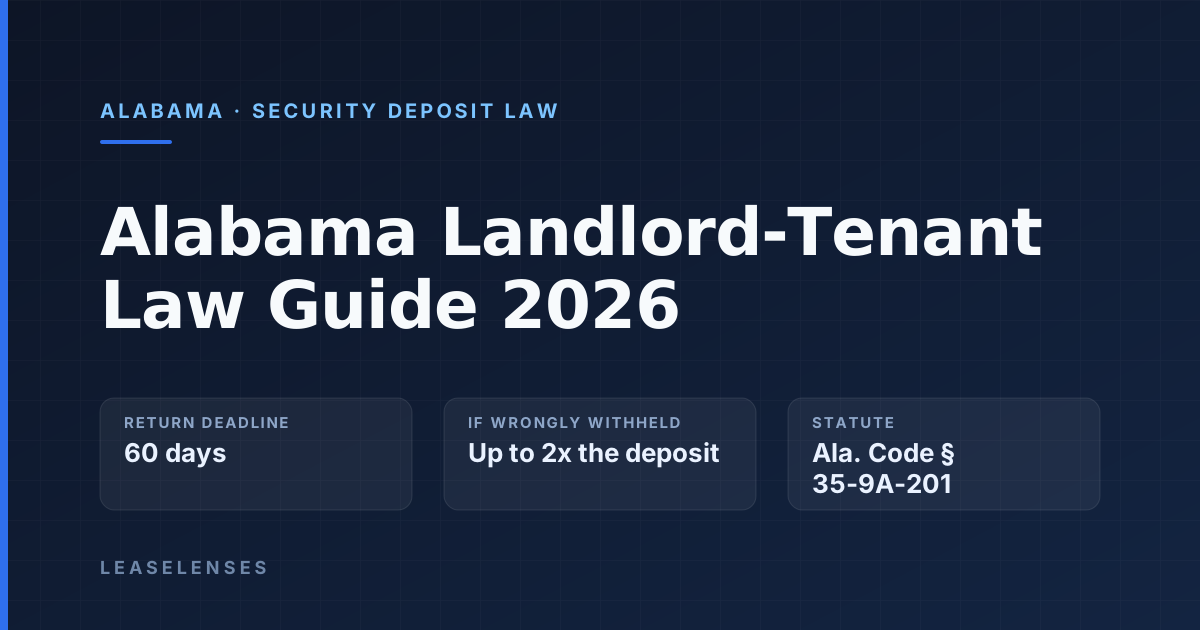
Navigating Alabama landlord-tenant law is essential for anyone renting or managing residential property in the state. Whether you rent in Birmingham, manage units in Huntsville, or are checking a lease in Mobile, the biggest lease-review issues are usually the same: the one-month security deposit cap, the 60-day refund/accounting deadline, landlord entry language, repair notices, and Alabama's seven-business-day termination notices.
Alabama's primary residential landlord-tenant statute is the Alabama Uniform Residential Landlord and Tenant Act (AURLTA), codified in Alabama Code Title 35, Chapter 9A (§§35-9A-101 through 35-9A-603). This act applies to most residential rental agreements and provides the baseline rights and obligations for both landlords and tenants throughout the state.
This guide focuses on the 2026 rules that matter most before signing or renewing an Alabama lease: what a landlord can charge up front, what can be deducted from a deposit, how notices should be written, when a tenant can terminate for repairs, and which lease clauses are worth reviewing before money changes hands.
Overview of the Alabama Uniform Residential Landlord and Tenant Act
The Alabama Uniform Residential Landlord and Tenant Act, found in Alabama Code Title 35, Chapter 9A, establishes the main framework for residential rental relationships in the state. It covers lease terms, deposits, possession, maintenance, entry, tenant obligations, remedies, retaliation, and landlord court actions.
Key Principles
The Act establishes several fundamental principles:
- Landlords must provide rental units that are safe and habitable
- Tenants must maintain the premises in a reasonable condition
- Both parties must act in good faith throughout the tenancy
- Lease agreements cannot waive the protections provided by the Act
- Retaliatory actions by landlords are prohibited
For a deeper look at Alabama's disclosure rules, see our landlord disclosure requirements guide.
Alabama Security Deposit Law
Security deposits are among the most frequently disputed aspects of Alabama rental relationships. Alabama Code §35-9A-201 sets a clear cap, a 60-day return/accounting rule, and a penalty if a landlord does not comply.
One-Month Deposit Cap
For residential leases covered by the Alabama Uniform Residential Landlord and Tenant Act, a landlord generally may not demand or receive a security deposit greater than one month's periodic rent.
There are important exceptions: Alabama law allows additional amounts for pets, changes to the premises, and increased liability risks to the landlord or premises. A lease that charges more than one month's rent should explain which exception applies instead of burying extra charges in vague "administrative" or "risk" language.
The 60-Day Return Rule
Under Alabama Code §35-9A-201, landlords must mail the remaining security deposit and any required written accounting within 60 days after termination of the tenancy and delivery of possession. This is one of the longer return windows among U.S. states, but it is not optional.
The 60-day period begins when the tenant:
- Terminates the tenancy
- Delivers possession of the rental unit
- Gives the landlord a mailing address or otherwise preserves a reliable way to receive the refund/accounting
If the landlord withholds any portion of the deposit, the landlord must provide an itemized written accounting of the amounts retained and refund the remainder.
Permitted Deductions
Alabama landlords may deduct from the security deposit for:
- Unpaid rent — Any rent owed through the end of the tenancy
- Damage beyond normal wear and tear — Costs to repair tenant-caused damage
- Breach of lease terms — Costs resulting from lease violations
- Tenant noncompliance costs — Amounts tied to the tenant's obligations under Alabama Code §35-9A-301
Normal wear and tear — minor scuffs on walls, small nail holes, worn carpet from ordinary use, and fading paint — cannot be deducted. Document the condition of the unit thoroughly at move-in and move-out with dated photos and signed checklists.
Consequences of Non-Compliance
If a landlord does not mail the refund or written accounting within the 60-day window, Alabama Code §35-9A-201 can make the landlord liable for double the tenant's original security deposit. Tenants should keep move-in photos, move-out photos, the forwarding address, and any mail or email about the deposit.
Tenant Rights to Habitable Housing in Alabama
One of the most fundamental tenant protections under the AURLTA is the right to a safe, habitable dwelling. Alabama Code §35-9A-204 outlines the landlord's maintenance obligations.
Landlord Obligations Under §35-9A-204
Alabama landlords must:
- Comply with all applicable building, housing, and health codes
- Make all repairs necessary to keep the premises in a fit and habitable condition
- Keep common areas clean and safe
- Maintain electrical, plumbing, heating, ventilating, and air-conditioning systems in good working order
- Provide running water and hot water
- Provide reasonable heat between October 1 and May 1, except where the statute allows the duty to be shifted by written agreement
- Maintain facilities and appliances supplied or required by the rental agreement
Tenant's Maintenance Responsibilities
Under Alabama Code §35-9A-301, tenants must:
- Keep the premises clean and sanitary
- Dispose of garbage and waste properly
- Use electrical, plumbing, and heating systems reasonably
- Not deliberately or negligently destroy property
- Comply with building and housing codes
- Report maintenance issues promptly to the landlord
Repair Remedies for Tenants
If a landlord fails to maintain the property in habitable condition after receiving written notice, tenants have several remedies under Alabama law:
1. Written Notice to the Landlord
The first step is to notify the landlord in writing. Under §35-9A-401, the tenant's notice should identify the breach and state that the rental agreement will terminate on a date at least 14 days after the landlord receives the notice if the breach is not remedied. If the same or substantially the same breach recurs within six months, the tenant may terminate with at least seven business days' written notice.
2. Termination of Lease
If the landlord fails to address a material health or safety violation within the required timeframe, the tenant may terminate the rental agreement under §35-9A-401. The tenant must provide written notice, and the condition cannot have been caused by the tenant, the tenant's family, or someone on the premises with the tenant's consent.
3. Do Not Assume Repair-and-Deduct
Alabama is not a broad repair-and-deduct state. Alabama Code §35-9A-164 says a tenant may not withhold rent while in possession unless a specific statutory remedy allows it. If a lease problem is serious, document the issue, send written notice, and use the remedy that actually fits the statute instead of silently reducing the rent.
4. Legal Action
Tenants can seek damages or injunctive relief for qualifying landlord noncompliance. For wrongful failure to supply essential services, review the specific statutory remedies before choosing between termination, substitute services, or a damages claim.
Entry Rights: When Can Alabama Landlords Enter?
Alabama law balances the landlord's need to access the property with the tenant's right to privacy.
Notice Requirements Under §35-9A-303
Under the AURLTA, landlords must provide two days' (48 hours') notice before entering a rental unit, except in emergencies. Entry must occur at reasonable times.
Permitted Reasons for Entry
Landlords may enter with proper notice for:
- Making necessary or agreed-upon repairs
- Inspecting the premises
- Showing the property to prospective tenants, buyers, or contractors
- Other purposes agreed upon by both parties
Emergency Entry
Landlords may enter without notice in genuine emergencies, such as fire, gas leaks, burst pipes, or other situations involving imminent danger to persons or property. Landlords may also enter if they reasonably believe the tenant has abandoned the premises.
Free check · no account, no card
Check this against your own lease
This guide covers Alabama's rules. The free check tells you which ones your lease actually meets, misses, or waives. Paste the clause here and keep reading — the verdict appears on this page.
Skip full upload for now
Paste one clause and get the first free verdict.
Use the exact wording about deposit, repairs, entry, notice, renewal, fees, waiver, or move-out. We keep this article's state-law context, show a free clause verdict first, and ask for payment only if the Action Packet is useful.
What the free verdict includes
Free verdict includes
What to paste
Paid packet adds
Exact clause proof · Preferred, fallback, and minimum wording · Likely reply, evidence to keep, deadline radar, and PDF export
Have the lease open?
Copy 2-6 sentences from the clause into the box. No file or card is needed for the first verdict.
Eviction Process in Alabama
Alabama's eviction procedures are governed by Alabama Code §35-9A-421 through §35-9A-461. Landlords must follow these procedures precisely; failure to do so can result in the eviction being dismissed.
Valid Grounds for Eviction
Alabama landlords can pursue eviction for:
- Nonpayment of rent — Failure to pay rent when due
- Material lease violations — Breaches of significant lease terms
- Criminal activity — Illegal conduct on the premises
- Holding over — Remaining after the lease term expires
- Health or safety violations — Tenant actions that endanger the property or other tenants
Notice Requirements Before Eviction
Before filing for eviction, landlords must serve proper notice:
- Nonpayment of rent: seven-business-day notice specifying the rent and late fees owed and the termination date (§35-9A-421(b))
- Material lease violation: seven-business-day notice specifying the acts or omissions and the termination date (§35-9A-421(a))
- Intentional material misrepresentation: not curable under §35-9A-421(a)
- Noncurable defaults: illegal drugs, certain firearm/firearm-ammunition conduct, criminal assault, or a substantially similar repeat breach after a prior notice and cure may allow termination on seven days' notice (§35-9A-421(d))
- Month-to-month tenancy termination: 30 days' written notice (§35-9A-441)
The Eviction Court Process
If the tenant does not comply with the notice, the landlord can file an unlawful detainer action in district court:
- Filing: Landlord files an unlawful detainer complaint with the district court and pays the filing fee
- Service: The tenant is served with the summons and complaint
- Hearing: The court schedules a hearing and both sides should bring the lease, notices, payment records, photos, and written communications
- Judgment: The judge hears evidence from both sides and issues a ruling
- Writ of Possession: If the landlord prevails, the court issues a writ of possession, and the sheriff can remove the tenant
Self-Help Evictions Are Illegal
Alabama law strictly prohibits self-help evictions. Landlords cannot:
- Change locks to exclude the tenant
- Shut off utilities
- Remove tenant belongings
- Physically remove or intimidate the tenant
Violations can allow the tenant to recover possession or terminate the rental agreement and recover the greater of actual damages or up to three months' periodic rent, plus reasonable attorney's fees under §35-9A-407.
Retaliation Protections
Alabama Code §35-9A-501 protects tenants from retaliatory actions by landlords. A landlord may not increase rent, decrease services, or threaten eviction in response to a tenant:
- Complaining about habitability issues or code violations
- Filing a complaint with a government agency
- Exercising any right granted by the AURLTA
- Joining or organizing a tenant association
If retaliatory action occurs within one year of a protected activity, the tenant may raise retaliation as a defense to eviction and may recover damages.
Lease Termination and Renewal in Alabama
Fixed-Term Leases
A fixed-term lease expires automatically at the end of the stated term. Neither party is required to give notice of non-renewal unless the lease specifies otherwise. If the tenant remains after the lease expires and the landlord continues accepting rent, the tenancy typically converts to a month-to-month arrangement.
Month-to-Month Tenancies
For month-to-month tenancies, either party must provide at least 30 days' written notice before termination under §35-9A-441.
Early Termination
Tenants may terminate a lease early without penalty in certain situations:
- Active military duty under the Servicemembers Civil Relief Act (SCRA)
- Landlord's material breach of the lease or the AURLTA
- Domestic violence situations (with proper documentation)
- Uninhabitable conditions that the landlord refuses to remedy
Otherwise, tenants who break a lease early remain liable for rent until the landlord re-rents the unit or the lease term expires. Alabama landlords have a duty to mitigate damages by making reasonable efforts to re-rent the property.
Alabama Lease Clauses Worth Reviewing Before You Sign
Alabama lease disputes often start with language that looked ordinary at signing: extra deposits, vague cleaning charges, entry permissions, broad fee provisions, or eviction clauses that do not match current seven-business-day notice language. Before signing or renewing, review the clauses that can change the cost and risk of the lease.
High-Risk Alabama Lease Terms
Upload your Alabama lease to LeaseLenses to flag terms worth reviewing, including:
- Deposit clauses charging more than one month's rent without a clear pet, alteration, or increased-liability exception
- Refund clauses that leave out the 60-day written accounting requirement
- Entry language that lets the landlord enter with less than two days' notice outside emergencies
- Repair clauses that imply the tenant can freely deduct repair costs from rent
- Eviction clauses that still use old 14-day language instead of current seven-business-day notice language
Check Your Own Lease, Not Another Checklist
The rules above only matter as they apply to the lease in front of you, and the deposit rule is where the real money sits. If your landlord did not mail the refund or the written accounting within 60 days, Alabama Code §35-9A-201 can make them liable for double your original security deposit. A lease that quietly drops the 60-day accounting requirement is the first place that goes wrong.
Check your Alabama lease free, no account needed — you get a count of the risky clauses and see which ones they are, covering deposit, entry, repair, renewal, and eviction language, before you sign.
Frequently Asked Questions
Q: Is there a limit on how much a landlord can charge for a security deposit in Alabama?
A: Yes. For covered residential leases, Alabama generally caps the security deposit at one month's periodic rent. The statute allows additional amounts for pets, changes to the premises, and increased liability risks.
Q: How long does my Alabama landlord have to return my security deposit?
A: Alabama Code §35-9A-201 requires the landlord to mail the remaining deposit and any itemized written accounting within 60 days after termination of the tenancy and delivery of possession. If the landlord misses the deadline, the tenant may be entitled to double the original security deposit.
Q: Can my Alabama landlord enter my apartment without notice?
A: Only in genuine emergencies such as fire, flood, or imminent danger. Otherwise, landlords must provide at least 48 hours' notice and enter at reasonable times under §35-9A-303.
Q: How much notice does a landlord need to give before eviction in Alabama?
A: It depends on the reason. For nonpayment of rent and most material lease violations, Alabama Code §35-9A-421 now uses seven-business-day notice language. Some noncurable defaults use seven days' notice. For month-to-month tenancy termination, §35-9A-441 generally requires 30 days' notice.
Q: Does Alabama have rent control?
A: No. Alabama does not have any rent control laws. Landlords can set and increase rent without statutory limits, but they must provide proper notice for month-to-month tenancies and cannot increase rent during a fixed-term lease unless the lease allows it.
Conclusion: Navigating Alabama Landlord-Tenant Law in 2026
Understanding Alabama landlord-tenant law empowers both landlords and tenants to navigate their rental relationships with confidence. The Alabama Uniform Residential Landlord and Tenant Act, codified in Alabama Code Title 35, Chapter 9A, provides a clear framework for security deposits, habitability standards, repair procedures, entry rights, and eviction protections.
Key takeaways for 2026:
- Security deposits are generally capped at one month's rent, with statutory exceptions for pets, premises changes, and increased liability risks
- Deposit refunds and written accountings are due within 60 days, and missed deadlines can trigger double-deposit liability
- Follow proper eviction procedures through the courts — never resort to self-help
- Maintain properties in habitable condition and use written repair notices before termination
- Provide required notice before entry (two days) and before eviction
- Document everything with move-in/move-out inspections and photos
Ready to check the lease language instead of guessing from a generic checklist? Upload your Alabama lease to LeaseLenses and review the clauses most likely to affect your deposit, repairs, entry rights, renewal, and eviction exposure.
Turn this guide into your lease gap checklist
Check whether your Alabama lease respects the one-month deposit cap and seven-business-day notice rules
Upload the lease and preview deposit-cap, 60-day accounting, repair, entry, and seven-business-day notice risks before paying.
The free check runs first — no credit card. You only ever pay if the findings are worth keeping.
Money, repair, notice, and move-out clauses to verify
A state guide explains the rule; a lease scan shows whether the document you are about to sign gives you a money, deadline, or rights problem.
- Security deposit, late fee, entry notice, and repair duties
- Missing disclosures, waiver language, and one-sided penalties
- State compliance warnings with copy-ready next steps to send or keep
Want the Alabama deadline emailed to you on the day it lands?
Tell us the day you moved out. We count the 60 days Ala. Code § 35-9A-201 allows and email you once, on the day the landlord runs out of time — with what you can do next.
No newsletter, no account. Your address is used for this one email.
Ready to compare this Alabama guide with your lease?
Sign in once, then choose your lease. The free preview shows whether deposit cap, 60-day accounting, repair, entry, or seven-business-day notice language deserves attention; unlock the action packet from $9.99 only if it helps.